
Buying property in Florida through an LLC can be a smart move, but it is not the right move for every buyer.
That is why ownership structure should be decided before you make an offer, not after you fall in love with a property.
For some buyers, an LLC creates cleaner separation between personal life and investment activity. For others, it can add paperwork, financing limitations, and tax complexity they did not expect. If you are buying in Miami, Fort Lauderdale, Boca Raton, West Palm Beach, or another South Florida market, the right answer depends on how you plan to use the property, how long you plan to hold it, and whether the property is mainly personal, rental, or a mix of both.
If you are still building your overall buying plan, start with this step-by-step guide for Canadians buying property in Miami or the broader For Canadian Investors page to understand the bigger cross-border picture first.
This article is educational, not legal or tax advice. The goal is to help you ask better questions before you choose how to take title.
Why buyers consider buying property in Florida through an LLC
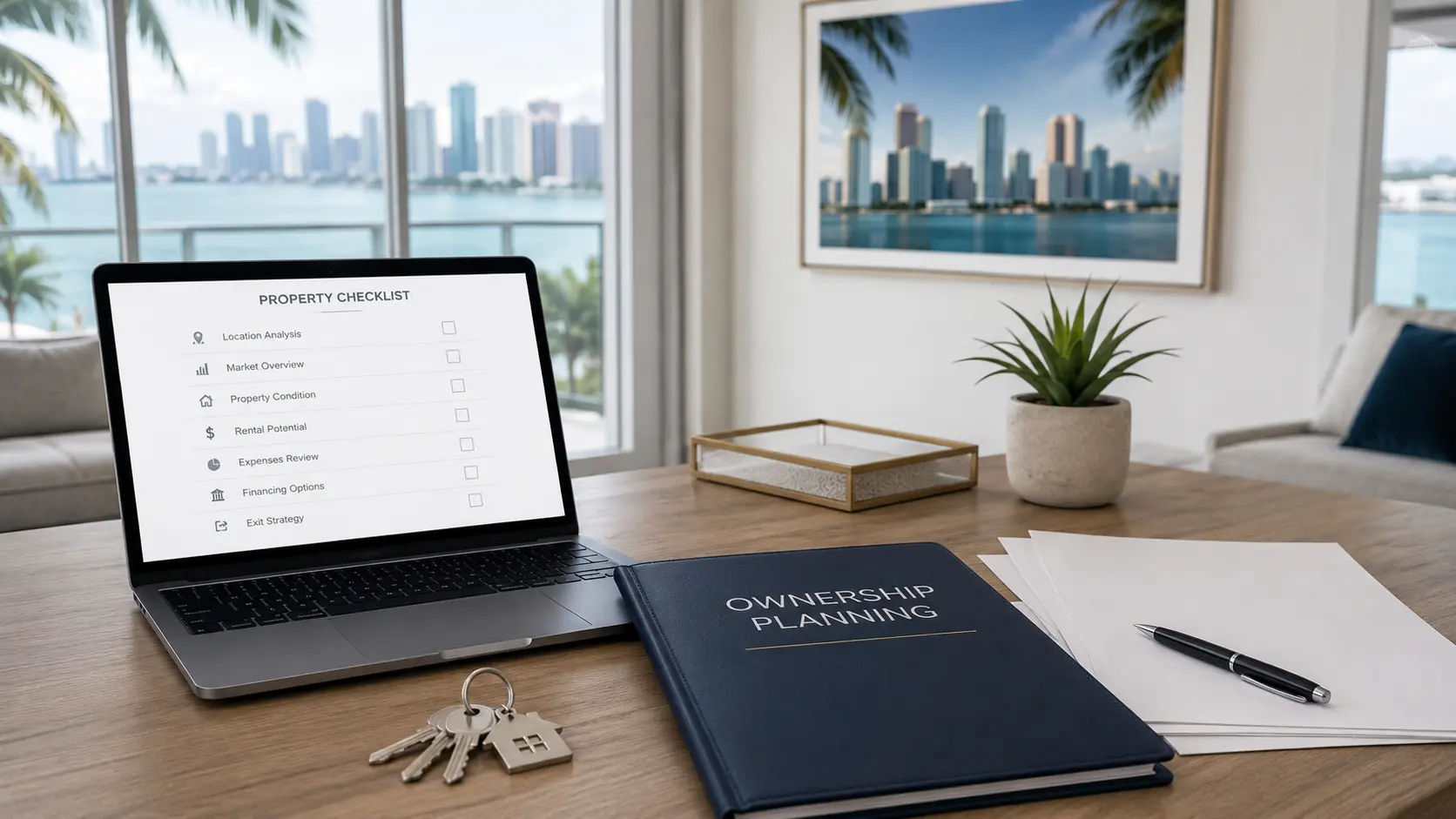
The appeal is easy to understand.
When buyers start looking at rental condos, vacation homes with income potential, or long-distance investment properties, they quickly realize that ownership is about more than just the address. It is also about liability, tax reporting, banking, estate planning, recordkeeping, and daily operations.
Buying property in Florida through an LLC often comes into the conversation because it can create a clearer business wrapper around an investment property. That can be helpful if the property will be rented, renovated, managed remotely, or held with partners.
For many investors, the biggest benefit is not magic tax savings. It is organization.
A separate entity can make it easier to keep rental income and expenses separate, sign management agreements, track repairs, maintain cleaner records, and structure ownership when more than one person is involved. If your plan includes long-distance ownership, the support on Miami P&B Investments’ property management and property maintenance pages shows why operational structure matters just as much as the purchase itself.
Still, buying property in Florida through an LLC is a tool, not a shortcut. The structure should match the plan.
When buying property in Florida through an LLC makes sense

If the property is mainly an investment
An LLC usually makes more sense when the property is being acquired primarily as a business asset.
That includes:
- a condo bought mainly for rental income
- a townhome or single-family property meant for long-term tenants
- a property being held by two or more partners
- a unit that may later be sold as part of an investment strategy
- a property that needs a formal operational setup from day one
If that sounds like your situation, pairing entity planning with legal services and accounting support before contract time can save a lot of cleanup later.
If you want a cleaner line between personal and property activity
Many buyers do not want rents, vendor invoices, maintenance calls, and lease paperwork flowing through their personal bank account.
That is especially true for remote owners.
If you live in Toronto, Vancouver, Montreal, or elsewhere outside Florida, buying property in Florida through an LLC can make the property feel more like a managed asset and less like a personal side project. That becomes even more important when you add bookkeeping, tenant screening, repairs, and year-end reporting.
If you are buying with partners or family members
Co-ownership is one of the strongest reasons to look at an LLC.
If two siblings are buying together, if a married couple wants a cleaner operating agreement, or if investment partners are putting in unequal amounts of money, an LLC can provide more structure than informal personal ownership. It can spell out percentages, voting rights, capital contributions, exit rules, and responsibilities.
That does not make the arrangement simple. It makes it clearer.
When personal ownership may be the better choice
Not every South Florida property should go into an LLC.
In fact, if the property is mostly for personal use, a simple ownership structure can often be the better fit.
If the property is mainly a vacation home
If you are buying a second home that you plan to enjoy personally for much of the year, and rental activity is limited or secondary, personal ownership may be easier to manage.
That is particularly true for buyers looking at lock-and-leave lifestyle markets like Aventura, certain buildings in Coconut Grove, or select condos in Miami where convenience matters more than formal business structure.
If you want the widest financing options
One practical question buyers ask is: can you get a mortgage when buying property in Florida through an LLC?
Sometimes, yes.
But financing through an LLC is not always as flexible or as straightforward as personal-name borrowing. Some buyers discover this too late, after they have already formed an entity and assumed the mortgage path would stay the same.
If financing is part of your plan, talk about the title-holding structure before the application goes too far. Miami P&B’s U.S. mortgage for Canadians guide is a good companion read if you are trying to line up financing early.
If simplicity matters more than structure
Some buyers are over-structuring a simple purchase.
If you are buying one personal-use condo, you are not running a portfolio, and you do not need partner governance or formal operating rules, personal ownership can be more practical. That is not always the answer, but it is often worth considering before you create paperwork that solves problems you do not actually have.
| Ownership option | Best fit | Main upside | Main tradeoff |
|---|---|---|---|
| Personal name | Vacation home, simpler purchase, straightforward financing | Cleaner setup and fewer moving parts | Less operational separation for rentals or partnerships |
| LLC | Investment property, remote ownership, partner deals | Better structure for operations and records | More filings, setup work, and possible lending complexity |
| Trust | Estate-planning-driven ownership goals | Can help with succession and privacy planning | Should be coordinated carefully with legal and tax advisors |
How buying property in Florida through an LLC works step by step
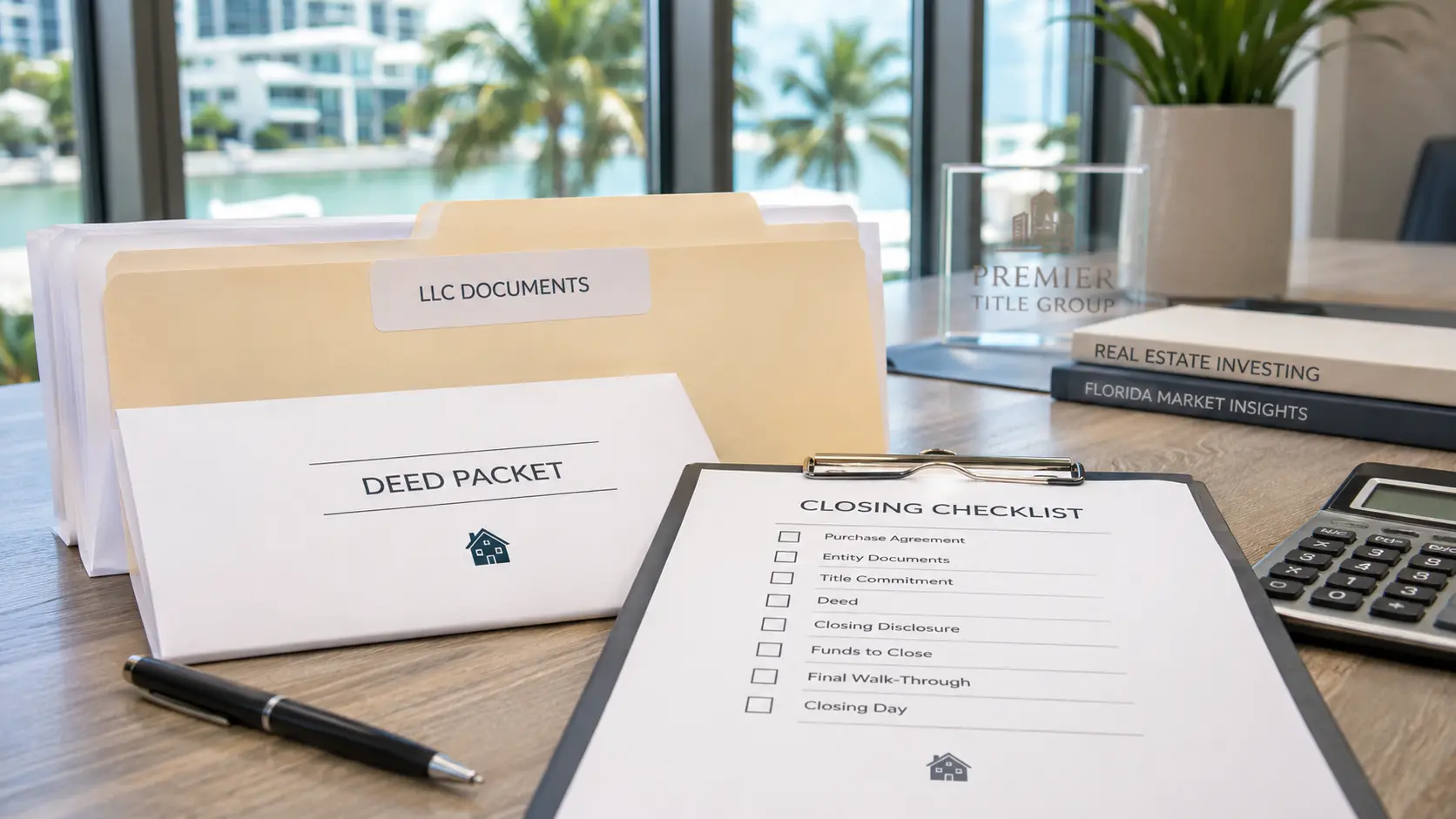
The process is not difficult, but the order matters.
Start with the strategy, not the filing
Do not form an LLC just because a friend said every investor should have one.
Start with the real question: what is this property supposed to do?
Will it be a full-time rental? A winter home with occasional leasing? A future renovation project? A hold-for-appreciation asset? A property shared with family? The answer should drive the structure.
Form the right entity before closing if possible
If you decide on an LLC, it is usually cleaner to decide before closing rather than deeding the property around afterward.
Florida buyers can review the Florida Division of Corporations filing process before formation, and each owner should understand how the entity will actually be managed in practice. After formation, the entity will usually need basic setup items such as an operating agreement, tax identification, and a separate bank account.
The IRS also explains that LLC tax treatment is not one-size-fits-all, so buyers should review the federal tax classification rules for LLCs with an advisor before assuming what the tax outcome will be.
Make sure the contract and title work match the entity plan
One of the easiest ways to create closing problems is to write the offer one way and plan to close another way without coordinating it.
Your agent, title company, lender, and attorney should all know who the buyer will be on the contract and who will take title at closing. That sounds obvious, but it is a common place where last-minute confusion starts.
This is also where title insurance review becomes important. If the entity is buying, make sure the closing team is working with the exact legal entity name and the right supporting documents.
Do the same condo due diligence you would do in personal ownership
Buying property in Florida through an LLC does not reduce the need for building-level review.
If you are buying a condo in Brickell, Edgewater, or another amenity-heavy market, you still need to review budgeting, reserves, rental restrictions, applications, approvals, and association documents.
That is why this topic pairs naturally with Miami P&B’s guides on Florida condo documents, Miami condo rental restrictions, and Florida short-term rental laws.
The LLC changes the ownership wrapper. It does not fix a weak building.
Do not casually transfer a property you already own into an LLC
Another common question is: should you buy personally now and move the property into an LLC later?
Sometimes buyers do that because they think it keeps things flexible.
But later transfers can create extra work and extra cost. Before changing title, buyers should understand how Florida documentary stamp tax may apply to deeds and transfers involving Florida real property.
The cleaner move is often to decide your ownership structure early, before the deed is recorded.
What Canadian buyers should think about before choosing an LLC

Canadian buyers usually need one more layer of planning than U.S. buyers.
That does not mean an LLC is off the table. It means cross-border advice matters more.
Can Canadians buy through a Florida LLC?
Yes, Canadians can buy through a Florida LLC.
But the better question is whether they should.
If you are a Canadian buyer using the property mainly for personal winter living, you may not need the added entity complexity. If the property is a true investment, remote-owned, partner-owned, or operationally active, an LLC may be worth the discussion.
Either way, the decision should be made alongside cross-border tax and reporting planning. Miami P&B Investments already supports that broader process through its accounting services, legal services, and dedicated Canadian Snowbirds Realty resources.
Think beyond the entity itself
For Canadian buyers, the structure decision affects more than ownership.
It can affect:
- how you handle rental income reporting
- how you move money between CAD and USD
- how you set up banking and bookkeeping
- how you plan for a later sale
- how much admin work you carry each year
That is why it helps to read this article together with Miami P&B’s guides on managing currency exchange risk, FIRPTA tax strategies, and Florida property taxes for non-residents.
Canadian residents should also be aware that cross-border ownership may involve Canadian foreign-reporting questions depending on the facts, which is why the CRA’s foreign reporting guidance is worth reviewing with your accountant.
Do not assume a Canadian corporation is automatically better
Some buyers think they should simply use an existing Canadian company to buy in Florida.
That can be the right answer in some situations, but it should never be treated as automatic. Cross-border entity ownership can create filing, reporting, and operational issues that are far more complex than buyers expect.
In other words, choosing an entity because it already exists is not the same thing as choosing the best ownership structure.
Common mistakes buyers make with LLC ownership
Thinking the LLC replaces insurance
It does not.
Entity planning and insurance planning should work together. If you are buying an investment property, review coverage and costs early. Miami P&B’s Miami property insurance costs guide is helpful here.
Using an LLC for a property that is mostly personal-use
The structure should fit the property.
If the property is mainly a lifestyle purchase and the LLC is creating stress instead of clarity, that is a sign to step back and rethink the plan.
Ignoring building rules
Can you buy a condo through an LLC?
Often, yes.
But some associations have extra requirements for entity-owned units, leases, occupants, approvals, or paperwork. Always confirm association rules before assuming the entity will not matter at the building level.
Mixing personal and business activity after closing
Buyers sometimes create an LLC and then run everything loosely anyway.
That defeats much of the point.
If you are going to use an LLC, use it properly. Separate records. Separate account. Clear agreements. Clear vendor workflow. Clean management chain.
Choosing structure before choosing market
The ownership decision should also reflect where you are buying.
A high-rise condo in Miami may call for a different operating approach than a property in Fort Lauderdale, Boca Raton, or West Palm Beach. Rental patterns, building rules, maintenance needs, and exit strategy all vary by submarket.
How to make the right decision in Miami and South Florida
A good ownership decision usually comes down to four questions.
First, is this property mainly personal, mainly investment, or truly mixed-use?
Second, will there be financing?
Third, will there be partners, remote management, or active rental operations?
Fourth, do the legal and tax benefits of the structure outweigh the added administration?
If the property is a personal escape with occasional guest use, personal ownership may be the cleaner answer.
If it is a true income-producing asset, buying property in Florida through an LLC may give you a better long-term framework.
If it is mixed-use, the decision gets more nuanced. That is where local market knowledge matters. The right building in Aventura may behave very differently from one in Wynwood or Bay Harbor Islands. Ownership structure should not be chosen in a vacuum. It should be chosen with the actual property, actual location, and actual use plan on the table.
Choose the structure that fits your property, your risk, and your goals

Buying property in Florida through an LLC can be a smart move for the right buyer.
It can also be the wrong move for the wrong property.
That is why the best approach is not “LLC or nothing.” The best approach is coordinated planning. Choose the market first. Choose the property next. Then choose the ownership structure that supports the plan.
Miami P&B Investments is well positioned for exactly that kind of guidance because the company already combines real estate support, legal services, accounting insight, property management, and maintenance support for buyers who need more than just a property search.
If you want help comparing personal ownership versus LLC ownership for a Miami or South Florida purchase, or if you want to pressure-test a specific property in light of your tax, rental, and management goals, the next best step is to contact Miami P&B Investments for a tailored strategy conversation before you go under contract.