
Miami property insurance costs can change the true price of a home, condo, or investment property long before you reach the closing table.
Many buyers start with the exciting numbers first: purchase price, monthly mortgage, estimated rent, projected appreciation, and maybe HOA fees. Those numbers matter. But in South Florida, insurance can be the line item that turns a great-looking deal into a tight one.
This is especially true for Canadian buyers, snowbirds, and long-distance investors who are comparing Miami against Toronto, Vancouver, Montreal, Calgary, or other major Canadian markets. A property may look attractive in U.S. dollars, but once you add insurance, flood exposure, HOA costs, exchange rate movement, maintenance, and property management, the monthly picture can look very different.
The goal is not to scare you away from Miami. The goal is to help you buy with cleaner numbers.
If you are still comparing neighborhoods, property types, or investment strategies, start with Miami P&B Investments’ guide to Miami real estate for Canadian investors and the broader real estate services page. Then use this insurance checklist to pressure-test any property before you commit.
Why Insurance Costs Matter More in Miami Than Many Buyers Expect
Miami is a coastal, hurricane-exposed, flood-aware, high-demand real estate market. That combination creates opportunity, but it also means buyers need to think about risk differently.
In some markets, property insurance is a predictable background expense. In Miami and South Florida, it can influence financing, cash flow, HOA fees, resale value, renovation planning, and whether a property still makes sense after all carrying costs are included.
Miami property insurance costs are shaped by several factors at once:
- Distance from the coast or bay
- Flood zone designation
- Windstorm exposure
- Building age and construction type
- Roof age and condition
- Impact windows, shutters, and storm protection
- Condo association insurance and reserves
- Deductibles, exclusions, and coverage limits
- Rental use, vacancy, or seasonal occupancy
That means two properties with similar prices can have very different insurance profiles.
A newer inland townhome may carry a cleaner insurance picture than an older waterfront building with deferred maintenance. A luxury condo with high HOA fees may still be better protected than a cheaper building with weak reserves and underfunded insurance. A single-family home with a newer roof and wind mitigation credits may perform better than one that looks beautiful but has hidden coverage problems.
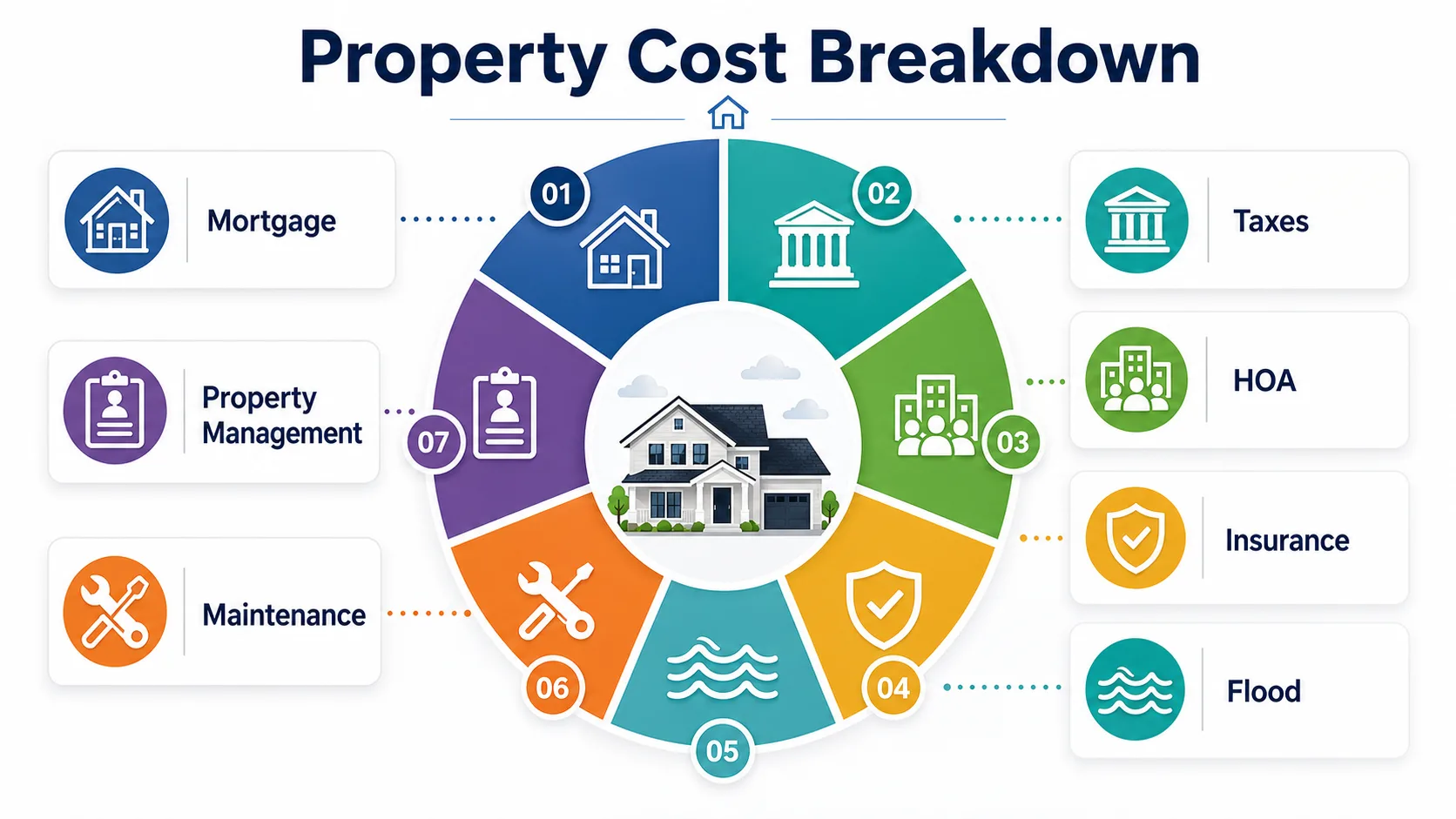
This is why Miami property insurance costs should be reviewed early, not treated as a final-week closing detail.
Are Miami Property Insurance Costs Always a Deal-Breaker?
No. Miami property insurance costs are not automatically a reason to avoid buying. They are a reason to buy more selectively.
Insurance is part of due diligence. Just like you would review location, comparable sales, rental restrictions, HOA fees, and taxes, you should review the insurance story behind the property.
For example, a condo in Brickell may have higher monthly dues because the building carries extensive amenities, staffing, reserves, and insurance. A property in Edgewater Miami may need closer review because bayfront towers can have different flood, wind, and building insurance considerations. A single-family home in Fort Lauderdale or Boca Raton may require a separate look at roof age, elevation, wind mitigation, and flood coverage.
The right answer depends on the property, the building, the financing plan, and your intended use.
Are you buying for personal use only? Are you planning seasonal rentals? Will the property sit vacant for part of the year? Are you financing with a U.S. mortgage? Are you paying cash from Canada? Will the property be owned personally, through an entity, or as part of a broader investment structure?
Each answer can affect how you evaluate coverage.
Condos vs. Single-Family Homes: Insurance Works Differently
One of the biggest mistakes buyers make is assuming that insurance works the same way for every property type.
It does not.
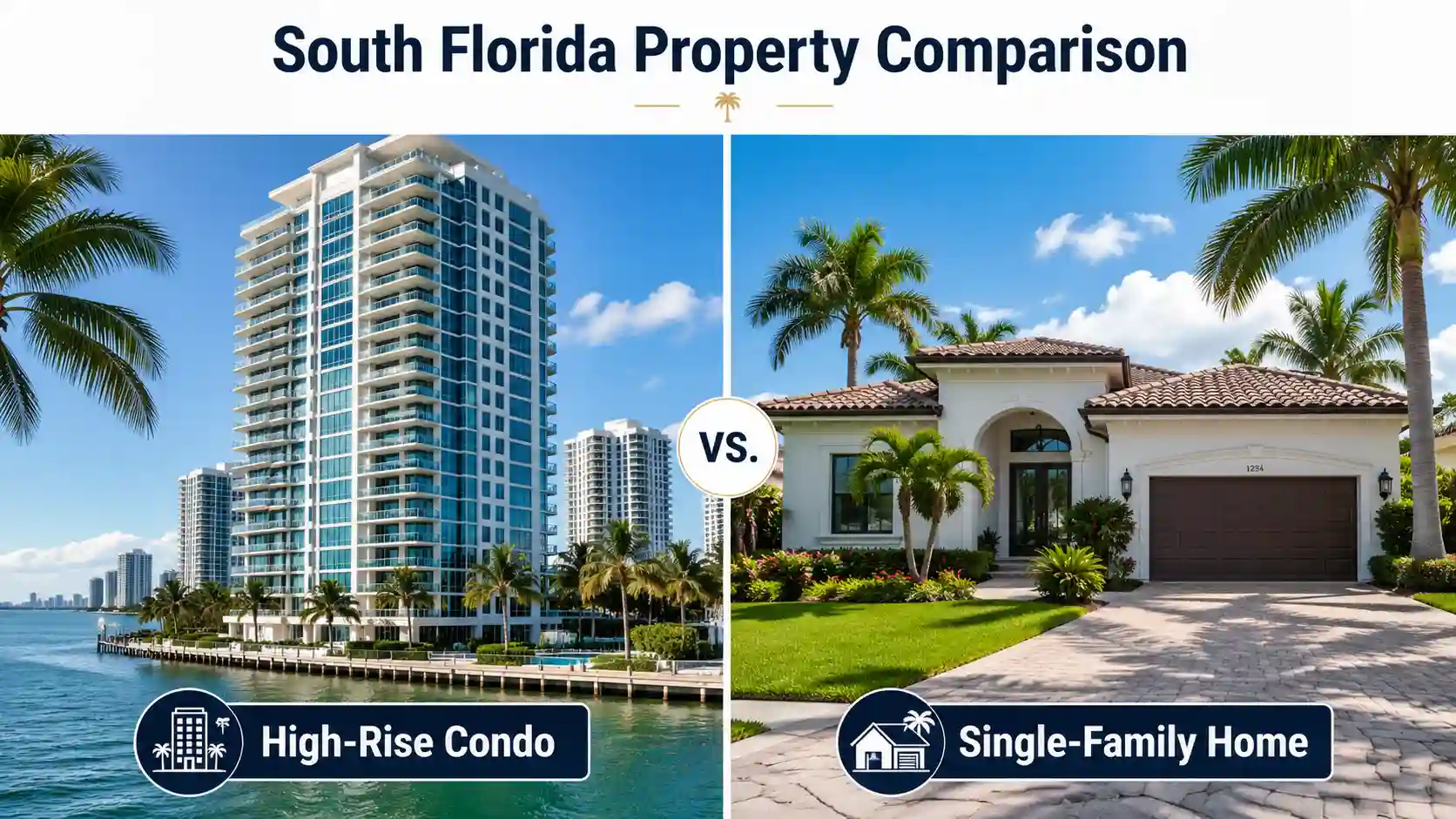
For a single-family home, the owner is usually responsible for the main property policy, wind coverage, flood coverage if needed, liability coverage, and any additional endorsements. The roof, structure, exterior, interior, and contents all need to be considered.
For a condo, the building association typically carries a master insurance policy for common elements and parts of the structure. The unit owner often needs an HO-6 condo policy for interior improvements, personal property, liability, loss assessment exposure, and other unit-level risks.
That sounds simpler, but it can be misleading.
With condos, Miami property insurance costs may show up indirectly through HOA fees. If the building’s master policy becomes more expensive, those costs can flow into monthly dues. If the association has a large deductible or a coverage gap, owners may face special assessments or loss assessment exposure. If the building has weak reserves, older infrastructure, or unresolved inspection issues, the insurance picture can become more complicated.
This is why condo buyers should also read Miami P&B Investments’ guides on Miami HOA fees, Florida condo special assessments, and Miami condo rental restrictions. These topics connect directly to insurance risk, even when they are not technically the same thing.
What Should Buyers Ask Before Making an Offer?
Before you make an offer, ask one simple question: “What could make this property more expensive to insure than I expect?”
That question opens the right conversations.
It pushes you to ask about the roof, windows, flood zone, claims history, building financials, HOA insurance, rental use, inspections, deductibles, and whether the property is eligible for the coverage you need.
It also prevents you from relying on generic online estimates. Miami property insurance costs are property-specific. A quick estimate may help you start, but it should not replace quotes, documents, and professional review.
For Canadian buyers, this matters even more because every U.S. dollar of annual insurance cost converts into Canadian dollars. A premium that looks manageable in USD can feel very different after currency conversion, especially when combined with taxes, HOA fees, property management, maintenance, travel, and accounting.
9 Smart Checks for Miami Property Insurance Costs
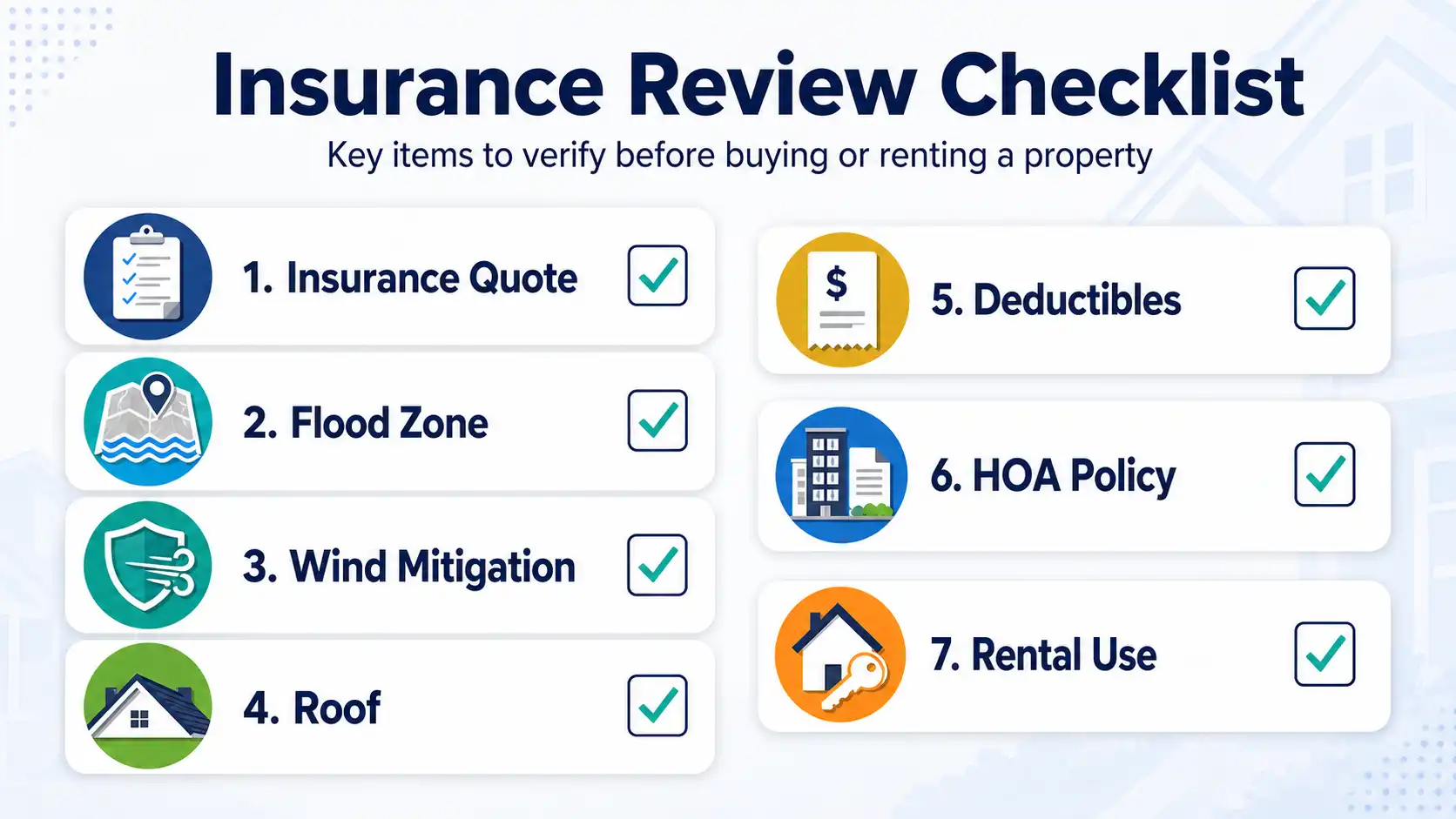
1. Check the flood zone before you fall in love with the view
Water views are part of Miami’s appeal. They are also part of the risk conversation.
Flood zones can affect lender requirements, flood insurance pricing, resale expectations, and long-term ownership costs. Even if you are buying a high-floor condo, the building itself may still carry flood exposure through garages, mechanical systems, lobbies, elevators, and common areas.
Use official resources like the FEMA Flood Map Service Center and Miami-Dade County’s flood zone maps as part of your early research. Then confirm details with your insurance professional and real estate advisor.
If you want a deeper real estate-specific explanation, Miami P&B Investments’ guide to Miami flood zones is the natural companion to this article.
2. Separate flood insurance from standard property insurance
Many buyers assume flood damage is automatically included in a regular homeowners policy. That is often not the case.
Flood coverage is usually a separate conversation. A standard policy may address certain wind or storm-related damage, but flood damage caused by rising water, storm surge, heavy rainfall, drainage overflow, or similar events may require separate flood insurance.
The Florida Department of Financial Services natural disaster guide is a useful consumer resource for understanding how flood and disaster coverage can differ.
For investors, the key point is simple: do not ask only, “Is the property insured?” Ask, “What exactly is covered, what is excluded, and what separate policies may be needed?”
3. Review windstorm exposure and mitigation credits
Windstorm risk is part of the South Florida ownership equation. Hurricane protection, roof shape, roof-to-wall connections, opening protection, shutters, impact windows, and construction quality can all affect how insurers evaluate a property.
A wind mitigation inspection may help identify features that reduce risk and may support premium savings. The Florida Office of Insurance Regulation provides helpful information on wind mitigation resources.
This is one of the most practical ways buyers can approach Miami property insurance costs. Instead of looking only at the premium, look at what drives the premium.
If a property has strong hurricane protection, newer systems, good documentation, and a clean inspection profile, it may be easier to insure than a property that appears cheaper but needs major upgrades.
4. Ask about roof age, permits, and four-point inspections
For single-family homes and older townhomes, roof age can matter a lot.
A home may show beautifully online, but if the roof is old, poorly documented, or near the end of its useful life, insurance options may become more limited or more expensive. Older properties may also require a four-point inspection that reviews key systems such as roof, plumbing, electrical, and HVAC.
This matters for both end-users and investors.
If you are planning to rent the property, a roof or electrical issue can affect insurance, tenant safety, repair timing, and cash flow. If you are buying from Canada, those issues can become even harder to manage without local support.
Miami P&B Investments’ property maintenance services and construction services can be especially useful when a property needs repairs, preventive work, or improvement planning after closing.
5. Understand hurricane deductibles
Insurance is not just about the annual premium. Deductibles matter too.
In Florida, hurricane deductibles may work differently from standard deductibles. A policy with a lower annual premium but a higher hurricane deductible may look attractive until you understand your real out-of-pocket exposure after a named storm.
This is especially important for owners who are not in Florida year-round. If you are a Canadian snowbird or long-distance investor, you need to know how claims, deductibles, emergency repairs, and access to contractors would work if a storm affects your property while you are away.
That is where property management becomes more than a convenience. It becomes part of your risk management plan.
6. For condos, review the master policy and HOA financials
Condo buyers should not stop at the unit policy.
Ask for the association’s master insurance information, budget, reserves, recent meeting minutes, special assessment history, and any known insurance-related increases. If the building’s policy has large deductibles or coverage concerns, unit owners may be affected through dues, assessments, or future resale challenges.
This is where Miami property insurance costs connect directly to HOA health.
A building with higher monthly fees may actually be more stable if those fees reflect realistic reserves, proper insurance, and proactive maintenance. A building with very low fees may look attractive until deferred costs surface later.
If you are comparing condos in Miami condos for sale, do not compare only purchase prices. Compare the full building risk profile.
7. Confirm whether rental use changes the policy
A property used only by the owner may need different coverage than a property used for seasonal, long-term, or short-term rentals.
If you plan to rent your Miami property, tell your insurance professional clearly. Do not assume your policy allows the same use you intend. Some policies may treat short-term rental use, vacancy periods, guest turnover, or commercial-style rental activity differently.
This is also why rental restrictions matter. A building may allow rentals only after a waiting period, only for certain minimum lease terms, or only a limited number of times per year. If your insurance plan assumes rental income, your building documents and policy should support that plan.
For buyers who want a hands-off rental strategy, Miami P&B Investments’ Canadian snowbirds realty resources and property management support can help connect the ownership plan with the operational reality.
8. Convert the annual insurance cost into your real monthly number
Many buyers review insurance annually, then forget to translate it into monthly cash flow.
That can distort the deal.
Use a simple monthly cost stack. Add mortgage, property taxes, HOA fees, insurance, flood insurance, utilities, property management, maintenance reserves, accounting, legal structure costs, and a vacancy buffer if the property will be rented.
| Cost Item | Why It Matters | Buyer Question |
|---|---|---|
| Property insurance | Protects against covered property risks | What is covered and excluded? |
| Flood insurance | May be separate from standard coverage | Is the property in a higher-risk flood zone? |
| HOA insurance share | Often built into condo dues | Is the building properly insured? |
| Deductibles | Affects out-of-pocket exposure | What would I owe after a storm claim? |
| Maintenance reserves | Helps prevent surprise costs | What repairs are likely in the next 3–5 years? |
For Canadian buyers, convert that final number into CAD using a conservative exchange rate. Miami property insurance costs should be evaluated in the same currency you use to measure your personal budget or investment return.
Miami P&B Investments’ guide to currency exchange risk when buying in Miami can help you think through that part of the equation.
9. Do not wait until closing week to request quotes
Insurance should be part of early due diligence, not an afterthought.
If you wait until the final days before closing, you may discover that the property is more expensive to insure than expected, requires additional inspections, has coverage limitations, or needs documents from the seller or association that take time to obtain.
That can create stress, delay financing, or weaken your negotiation position.
Instead, request quotes and document review early. If the numbers are higher than expected, you may still have time to renegotiate, compare another property, request credits, adjust your financing plan, or walk away before spending too much time and money.
How Miami Property Insurance Costs Affect ROI
For investors, insurance is not just a safety expense. It directly affects return.
Every extra dollar in annual premium reduces net operating income. Every deductible exposure affects your risk-adjusted return. Every HOA insurance increase can affect cash flow. Every coverage gap can become a future capital event.
That does not mean the cheapest property is best.
In Miami, the smarter approach is to compare risk-adjusted value. A property with a slightly higher purchase price but better building health, stronger reserves, newer systems, cleaner insurance, and better rental rules may outperform a cheaper property with hidden insurance pressure.
This is why investors should connect insurance review with broader acquisition strategy. Miami P&B Investments’ article on how to invest in Miami real estate can help frame the bigger strategy, while this article helps tighten the risk side of the numbers.
What Canadian Buyers Should Know Specifically
Canadian buyers face several extra layers when evaluating Miami property insurance costs.
First, premiums are paid in U.S. dollars. If the Canadian dollar weakens, your real cost rises even if the insurance premium does not change.
Second, long-distance ownership makes response time more important. If there is storm damage, water intrusion, tenant damage, or an urgent maintenance issue, you need someone local who can inspect, coordinate repairs, document the issue, and communicate with the right parties.
Third, insurance can affect tax and accounting assumptions. Rental income, repairs, claims, deductibles, ownership structure, and expense tracking should be organized properly from the beginning. This is where accounting services and legal services can support a cleaner investment plan.
Finally, Canadian buyers should not evaluate properties only as vacation homes. Even if you plan to use the property personally, think like an investor. Ask how insurance, HOA costs, flood risk, maintenance, and resale appeal would look to the next buyer.
Neighborhood Differences Can Change the Insurance Conversation
Miami property insurance costs are not identical across South Florida. Property type, age, elevation, distance from water, construction quality, and building condition often matter more than the city name alone.
Still, location can shape the questions you ask.
In Miami, high-rise condos, older homes, waterfront areas, and dense urban buildings each require a different insurance review. In Brickell and Edgewater, condo association coverage and reserves may be central. In Coconut Grove, buyers may compare older charm with renovation and maintenance needs. In Wynwood, investors may focus more on rental use, new development, and building rules.
In Fort Lauderdale, boating, canals, waterfront homes, and short-term rental potential can bring a different set of insurance and maintenance questions. In West Palm Beach, buyers may compare condos, historic homes, and waterfront property types. In Boca Raton, gated communities, single-family homes, and country club properties may require careful review of association responsibilities and owner coverage.
The main takeaway is simple: do not use one insurance assumption for every South Florida property.
What Documents Should You Request?
A strong due diligence file may include:
- Current insurance quote or policy estimate
- Flood zone information
- Elevation certificate if relevant
- Wind mitigation inspection
- Four-point inspection for older properties
- Roof permit and roof age documentation
- Condo master insurance summary
- HOA budget and reserves
- Recent special assessment notices
- Board meeting minutes
- Rental rules and occupancy restrictions
- Claims history where available
Not every document applies to every deal. But the more complex the property, the more important the insurance file becomes.
A cash buyer may not have lender requirements, but that does not mean insurance is optional from an investment standpoint. A financed buyer may have lender-driven insurance requirements, but that does not mean the lender’s minimum is enough for your personal risk tolerance.
How Miami P&B Investments Helps Buyers Understand Insurance Risk
Miami property insurance costs are easier to manage when you evaluate them before you buy, not after.
At Miami P&B Investments, the goal is not simply to help buyers find attractive listings. It is to help buyers understand the full ownership picture: purchase price, taxes, HOA fees, insurance, rental rules, maintenance, legal structure, accounting, and long-term management.
For Canadian buyers, that support matters even more. Buying from Toronto, Vancouver, Montreal, Calgary, or anywhere else in Canada means you need a trusted local team that can review details, ask practical questions, coordinate professionals, and help you avoid expensive surprises.
Our real estate services help you compare properties with investment logic, not just listing photos. Our property management services support long-distance ownership after closing. Our property maintenance and construction support can help keep the property in stronger condition. Our legal and accounting partners help Canadian and international buyers think through structure, reporting, and compliance.
If you are comparing condos, homes, or investment properties in Miami or South Florida, do not review Miami property insurance costs in isolation. Review them as part of the full ownership strategy.
To get help evaluating a specific property, neighborhood, or investment plan, contact Miami P&B Investments and book a consultation before you move forward.