Miami flood zones can change the entire math of a South Florida purchase. They influence insurance costs, financing options, renovation plans, resale strategy, and the amount of stress you may carry after every major rain event or storm season.
For many buyers, the mistake is assuming Miami flood zones only matter if a property sits directly on the water. In reality, they matter whether you are comparing a house in Coconut Grove, a condo in Edgewater, a bayfront unit in Brickell, or an investment property you plan to own from Canada. The right question is not, “Is this property in a flood zone?” The right question is, “How does this property’s flood exposure change my budget, my ownership plan, and my long-term risk?”
That distinction is especially important if you are a Canadian investor buying in Miami or a remote owner following our step-by-step guide for Canadians buying property in Miami. Distance magnifies surprises. A local buyer may solve a water issue in person. A Canadian owner often has to handle the same issue across borders, in U.S. dollars, and on someone else’s timeline.
Why Miami Flood Zones Matter More Than Many Buyers Think
Miami flood zones affect more than a map label. They can shape lender requirements, insurance premiums, renovation scope, permit strategy, and how easily a future buyer can finance the property. They also influence how comfortable you feel holding the asset for years rather than months.
A lot of buyers focus first on finishes, amenities, and neighborhood lifestyle. Those things matter. But if you are comparing opportunities across Miami real estate, you need to understand whether the property’s flood profile changes your true cost of ownership. A beautiful property can still become a frustrating investment if the flood risk was never priced properly.
Does a lower-risk label mean you can ignore flooding?
No. Miami flood zones are a starting point, not a guarantee. A lower-risk zone does not mean zero water risk. Drainage problems, lot grading, street elevation, first-floor design, and past water intrusion still matter. On the other side, a higher-risk designation does not automatically make a property a bad purchase. It simply means your due diligence has to be sharper and your budget has to be more realistic.
That is why serious buyers look at flood exposure the same way they look at taxes, HOA costs, and building quality. It is one line in a larger underwriting process, but it is a line that can change everything if you skip it.
How to Read Miami Flood Zones Without Overreacting
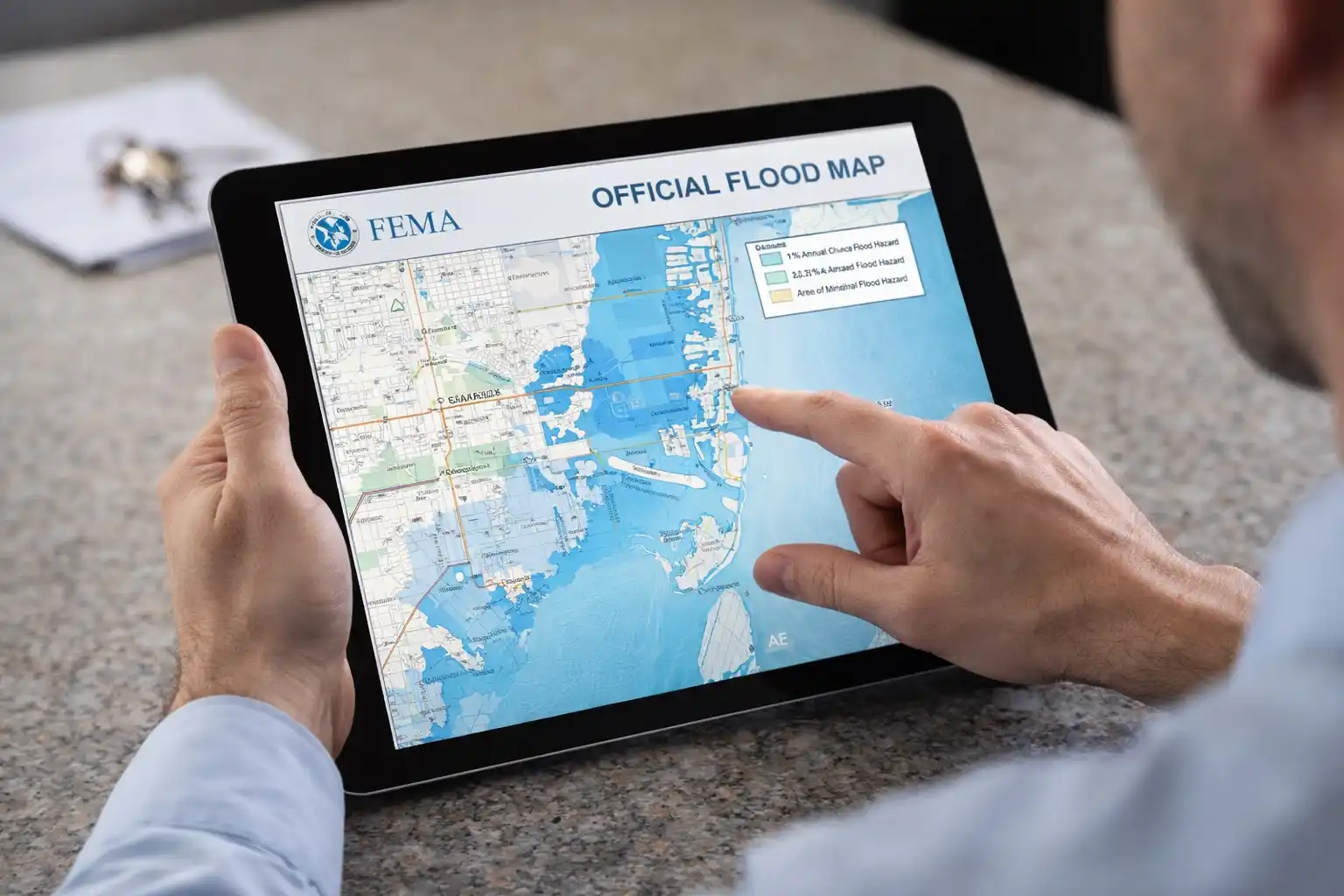
Most buyers do not need to memorize every FEMA term, but they do need to know what they are looking at when Miami flood zones appear in disclosures, insurance conversations, or lender conditions.
| Flood zone | What it usually means | Why buyers care |
|---|---|---|
| X or shaded X | Lower or moderate mapped flood risk, but not zero risk | Insurance may be optional for some loans, yet water issues can still exist and should still be reviewed |
| AE | Detailed moderate-to-high flood risk area with base flood elevation data | Often triggers closer lender and insurance review and can materially change annual ownership cost |
| AH or AO | Shallow flooding or sheet-flow flooding areas | Buyers need to understand how water moves across the site, not just whether the home looks elevated |
| VE | Coastal high-hazard area with added wave action exposure | Usually means the highest level of scrutiny for design, insurance, and long-term resilience |
| A or D | High risk or undetermined risk that requires deeper investigation | Do not rely on assumptions. Ask for more documentation before getting comfortable |
Miami flood zones make more sense when you stop treating them like a pass-fail test. Think of them as a filter that tells you where to ask harder questions. You still need to review elevation, drainage, prior water history, neighborhood topography, and how the building or house was actually maintained.
For condo buyers, that review should sit alongside the same building-level due diligence we discuss in our guides to non-warrantable condos in Florida, Miami HOA fees, and Florida condo special assessments. The zone is only one part of the story. The building’s reserves, insurance strategy, and maintenance culture still matter.
Miami Flood Zones and Flood Insurance
One of the fastest ways Miami flood zones change a deal is through insurance.
Many buyers assume flood protection is already wrapped neatly into the standard cost stack. It often is not. Flood coverage deserves its own conversation early in the deal, not the week before closing.
For financed buyers, Miami flood zones can trigger mandatory flood insurance depending on the loan type and the property’s designation. For cash buyers, the decision is more flexible, but the financial risk is still real. A cash purchase does not make water damage cheaper. It only removes the lender from the conversation.
Are condos simpler than houses when Miami flood zones are involved?
Sometimes, but not always.
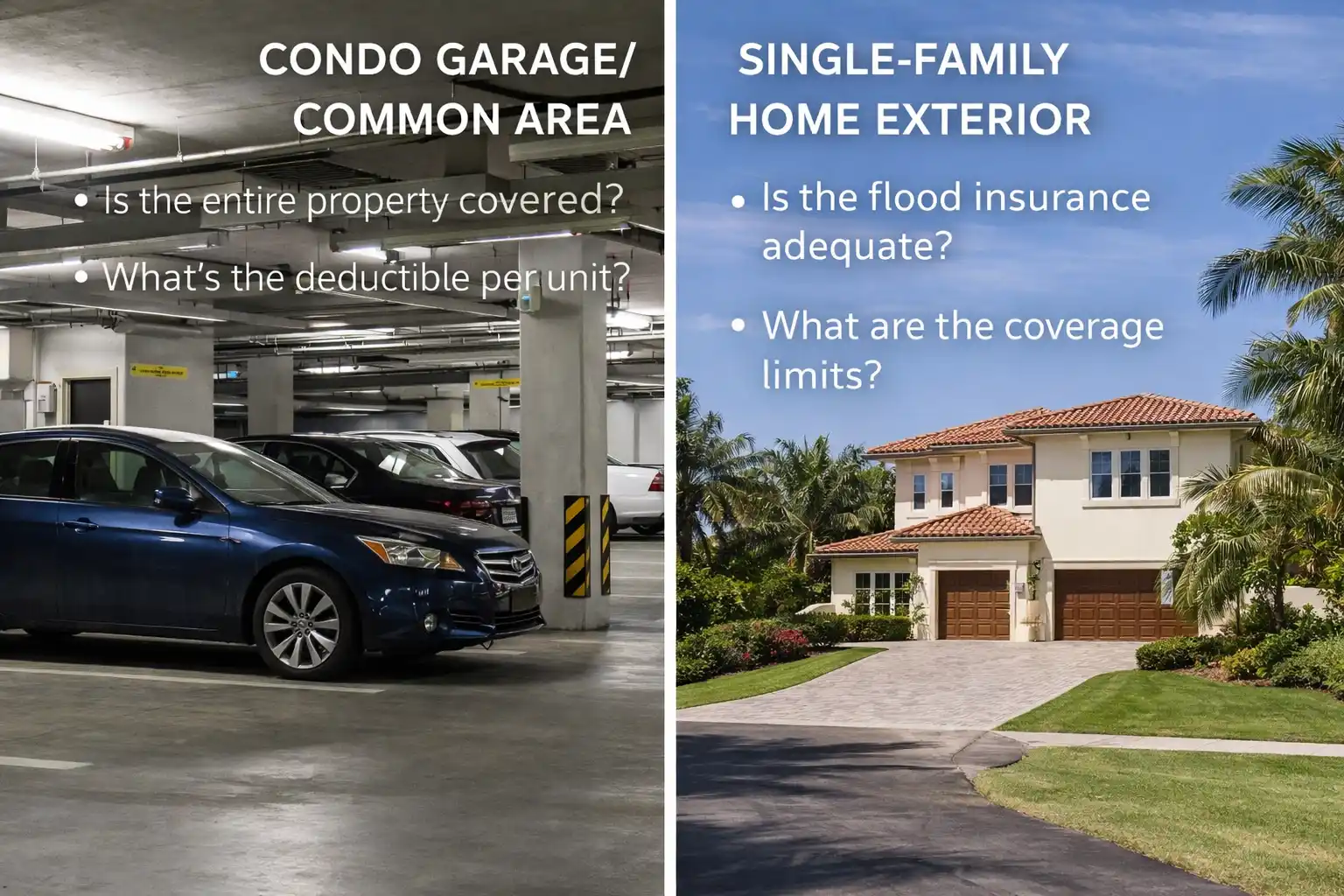
A high-floor condo may feel safer than a ground-level house, and in some ways it is. But Miami flood zones still affect the building. Buyers should ask what the master association policy covers, how deductibles work, whether garages or common areas have taken water, and whether future insurance pressure could flow into monthly dues or future assessments.
House buyers have a different checklist. They need to think about lot elevation, doors and openings, mechanical systems, drainage, landscaping, and whether post-storm repairs would be straightforward or highly disruptive.
If financing is part of your plan, review this issue alongside our U.S. mortgage for Canadians in Florida guide. Insurance, flood zone status, and building quality often meet in the same underwriting conversation.
Why Miami Flood Zones Are Not Just a Waterfront Issue
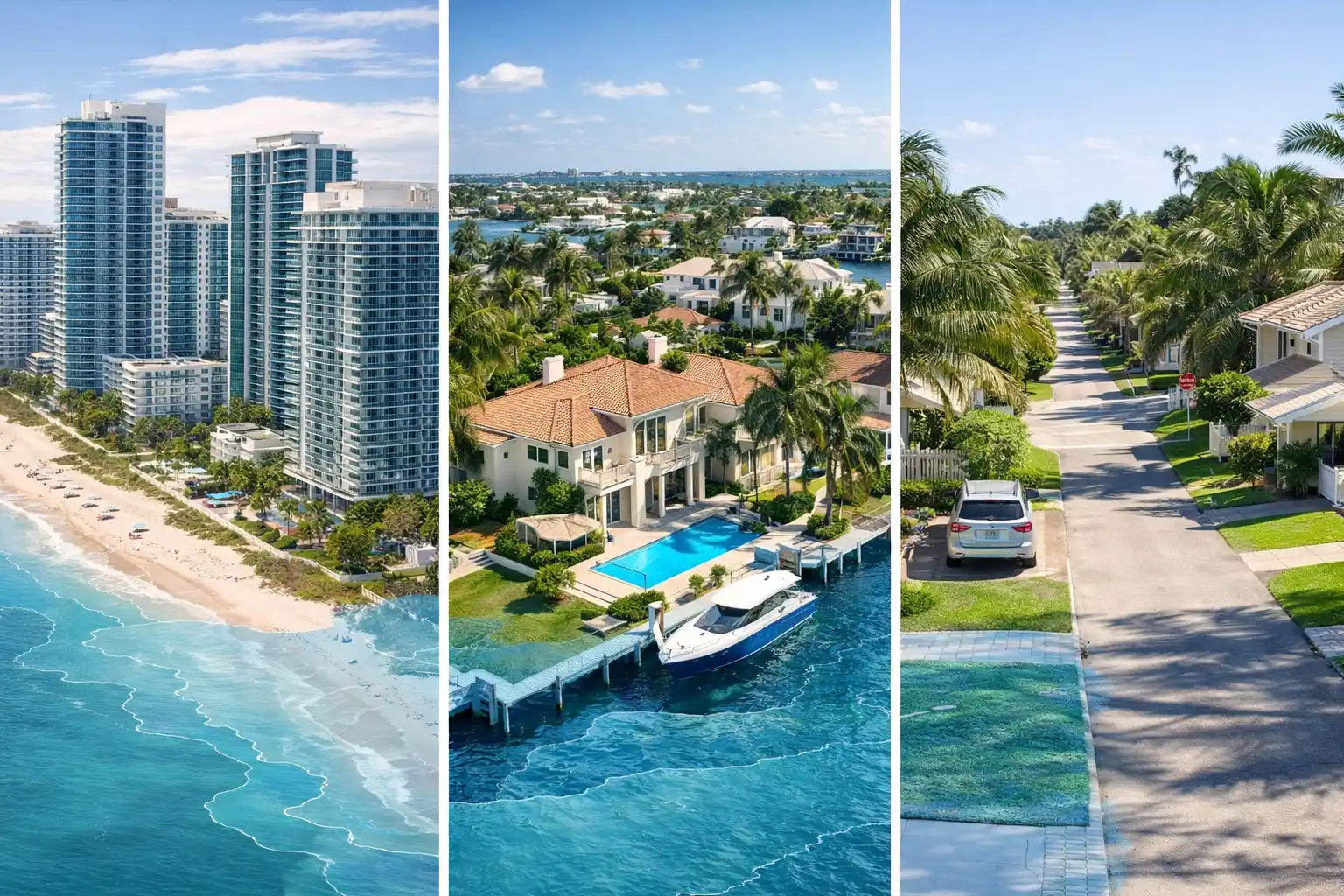
One reason buyers misread Miami flood zones is that they picture only beachfront homes or dramatic storm-surge headlines. In practice, South Florida flood exposure can come from several directions at once: heavy rainfall, drainage limitations, canal overflow, king tides, and coastal surge.
That means the smartest buyers do not reserve flood due diligence for obvious waterfront homes. They use the same discipline whether they are looking at a bayfront tower in Edgewater, a walkable condo in Brickell, a house in Coconut Grove, a boutique property in Bay Harbor Islands, or a purchase farther north in Fort Lauderdale or West Palm Beach.
The neighborhood still matters, but property-specific details matter more. Two homes on the same street can perform very differently if one sits better, drains better, or has been upgraded more intelligently. Two condos in the same zone can feel completely different if one building has elevated systems, well-managed reserves, and strong post-storm protocols while the other reacts only after a problem appears.
9 Smart Checks Before You Buy in Miami Flood Zones
The best way to use Miami flood zones is to turn them into a practical checklist instead of an emotional reaction.
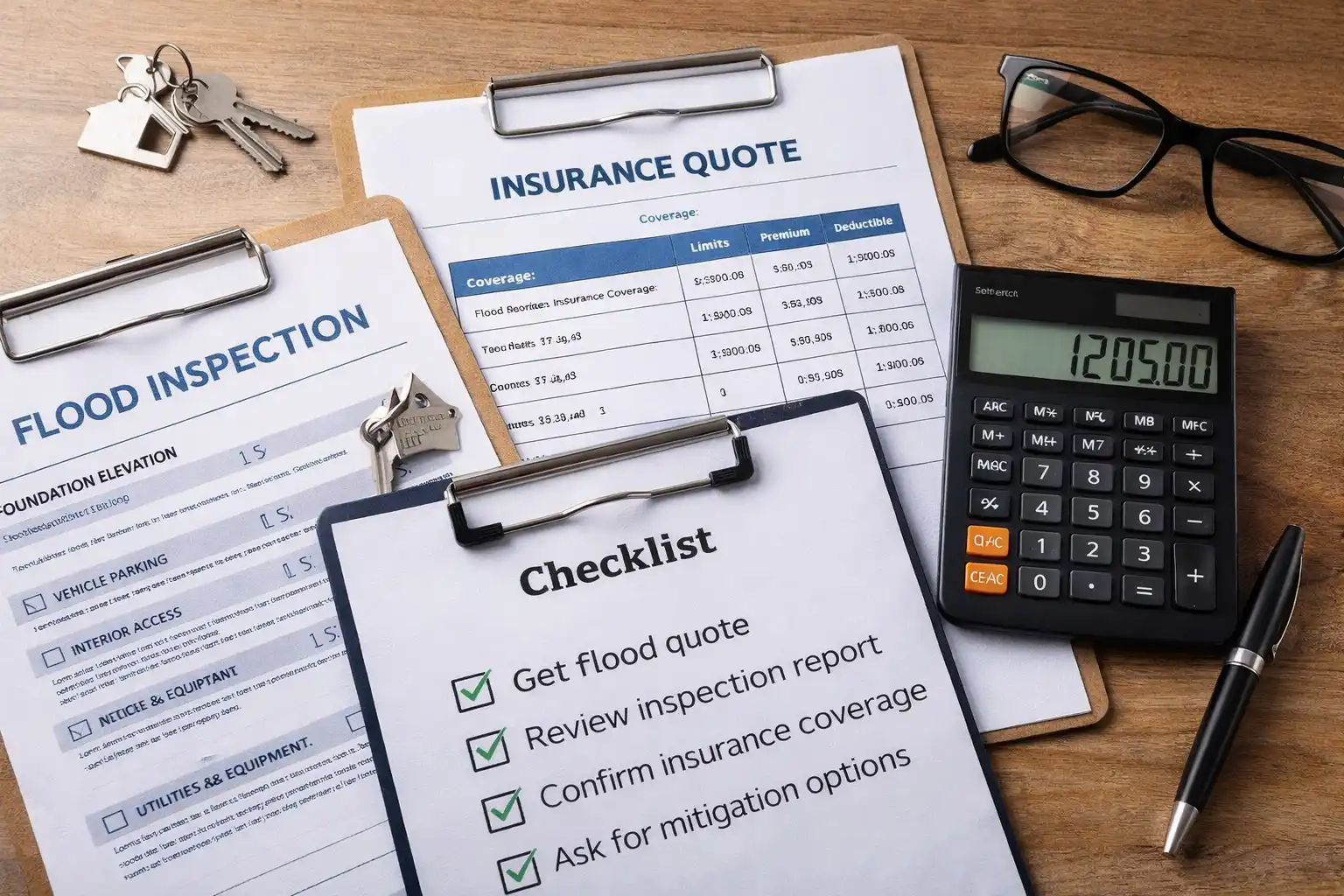
- Verify the official current designation. Start with the Miami-Dade Flood Zone Maps and the FEMA Flood Map Service Center. Do not rely only on a listing description or a verbal summary.
- Ask whether any map changes are pending. Effective maps, preliminary maps, and local interpretation can affect how you think about future insurance and resale.
- Request an elevation certificate if one exists. Miami flood zones tell you the mapped risk. Elevation data helps you understand how the structure actually sits relative to that risk.
- Get a real insurance quote early. Do this before you fall in love with the deal. Guessing is not budgeting.
- Review disclosure history. Ask about prior claims, water intrusion, mold remediation, drainage work, and any repeated building or site issues.
- Inspect the most vulnerable areas. For houses, pay attention to grading, lower openings, garage conditions, and mechanical placement. For condos, review garages, lobbies, elevator equipment, ground-level amenities, and service areas.
- Model the full carry cost. Miami flood zones can change insurance, reserves, operating costs, and future repair planning. Canadians should also convert that cost into CAD and stress-test it, just as we explain in our guide to currency exchange risk when buying in Miami.
- Understand renovation and repair implications. If the property ever suffers major damage, compliance and rebuilding rules may become part of the cost story.
- Plan remote ownership in advance. If you will be back in Canada for much of the year, decide who checks the property, who coordinates vendors, and who responds after major weather events.
What Canadian Buyers Should Know About Miami Flood Zones
Miami flood zones matter for every buyer, but they matter in a slightly different way for Canadians.
A local owner can drive over, inspect a problem, meet a contractor, and make a same-day decision. A Canadian owner may be managing the same issue from Toronto, Montreal, Calgary, or Vancouver while dealing with travel schedules, currency conversion, and cross-border paperwork.
That is why flood exposure should never be reviewed in isolation. It should be tied to your ownership structure, tax planning, seasonal-use pattern, and service team. Our Canadian Snowbirds Realty resources and Canadian investor hub are built around exactly that kind of full-picture planning.
Are Miami flood zones a reason for Canadians to avoid South Florida?
No. They are a reason to buy more selectively.
Informed buyers can still find excellent properties in South Florida. The difference is that they buy with cleaner assumptions. They know what insurance may cost. They understand what kind of maintenance oversight the property will need. They know whether the building is proactive or reactive. And they have a local team that can act when they are not physically in Florida.
For many Canadians, Miami flood zones also need to be folded into tax and budgeting conversations. If premiums rise, if preventive work is needed, or if a storm leads to deductible exposure, those are not abstract risks. They become real USD expenses that affect your annual return and your CAD cash flow. That is why our accounting services and legal services often become part of the same planning conversation.
How Miami Flood Zones Affect Resale and Investment Performance
Miami flood zones do not just shape today’s closing decision. They can influence who buys from you later, how easily that buyer gets financing, and how aggressively you may need to price the property.
That does not mean higher-risk properties never perform well. Plenty of desirable homes and condos in South Florida trade successfully despite flood exposure. But the strongest performers are usually the ones with a clear risk story. Buyers want to see that the property was chosen intelligently, insured correctly, maintained consistently, and priced with reality in mind.
Here are three simple examples.
A discounted house can look attractive until insurance, drainage improvements, and future repair planning erase the apparent bargain.
A lower-risk condo can still disappoint if the association is underinsured, underfunded, or consistently surprised by water issues.
A property in a tougher zone can still be a strong buy if the building is well run, the premium is understood, the systems are resilient, and the price reflects the risk honestly.
In other words, Miami flood zones matter, but they are rarely the only variable that determines performance. Smart investors look at the whole stack: location, product type, financing, insurance, maintenance quality, rental strategy, and exit flexibility.
If you want a broader future-facing resilience lens while you compare properties, the NOAA Sea Level Rise Viewer and the NFIP flood zone guidance are useful tools to review alongside property-level due diligence.
How to Use Miami Flood Zones as a Competitive Advantage
The buyers who usually overpay are the ones who either panic or ignore the issue completely.
The better approach is to use Miami flood zones as leverage. If a seller has not prepared good documentation, that is a signal. If insurance quotes are messy, that is a signal. If a building has repeated water problems with no clear corrective plan, that is a signal too.
On the other hand, if a property has clean documentation, realistic insurance, solid maintenance, and a coherent flood story, you may have more confidence than other buyers who are reacting emotionally instead of analytically. That can help you negotiate better and move faster on the right property.
This is particularly useful for investors who are scanning a large inventory of opportunities through our real estate services and comparing them against long-term operating realities rather than just listing photos.
How Miami P&B Investments Helps Buyers Navigate Miami Flood Zones

Miami flood zones are easiest to manage when they are reviewed before emotion takes over.
At Miami P&B Investments, we help buyers connect the map to the real decision. That means narrowing the right neighborhoods, reviewing property type tradeoffs, pressure-testing carry costs, and coordinating the people who need to weigh in before you commit.
For some clients, that starts with finding better-fit inventory through our Miami, Edgewater, Brickell, and Coconut Grove pages. For others, it means setting up the operational side through property management, property maintenance, or construction support for upgrades and resilience work.
Canadian and international buyers often need the full stack. We can help you connect flood-zone review with financing, document review, insurance conversations, legal and accounting coordination, and ongoing property oversight so you are not trying to solve South Florida ownership problems from another country after closing.
If you want help comparing specific properties, understanding which flood questions matter most, or building a smarter due-diligence plan before you make an offer, contact Miami P&B Investments. The goal is not to avoid every property touched by flood risk. The goal is to buy the right property with open eyes, a realistic budget, and the right team behind you.