A foreign national mortgage Florida strategy can let a Canadian finance a Florida home or condo without first building years of U.S. credit history. The key is choosing the right lending lane, preparing Canadian income and asset documents in the format the lender expects, and making sure the property itself is financeable.
For Canadians, that last point matters more than many buyers expect. A strong borrower can still run into trouble if a condo building has insurance, reserve, structural, litigation, or project-eligibility issues. Before making an offer, start with Miami P&B Investments’ existing U.S. mortgage guide for Canadians, then use this deeper foreign national mortgage Florida checklist to prepare your file and screen the property.
Why a Foreign National Mortgage Florida Strategy Is Different
A foreign national mortgage Florida loan is a U.S. mortgage structure used by eligible non-U.S. borrowers buying Florida real estate. In practice, a Canadian buyer may qualify through a cross-border bank program, a specialized foreign-national lender, or an investment-focused loan program depending on residency, income, credit profile, property use, and the lender’s rules.
That distinction matters because “Canadian buyer” is not one single underwriting category. A snowbird buying a second home, a Toronto investor buying a rental condo, and a Canadian relocating to the United States may be evaluated under different programs.
The first job is therefore not to chase the lowest advertised rate. It is to identify which lender can actually underwrite your Canadian financial profile and the specific Florida property you want.
Can Canadians get a U.S. mortgage without U.S. credit history?
Often, yes. Canadians should specifically look for lenders or cross-border banking programs designed to evaluate borrowers whose primary financial history is in Canada.
For current lender-specific eligibility rules, review official resources such as RBC Bank’s U.S. mortgage options for Canadians and BMO’s cross-border mortgage program before assuming that one bank’s requirements apply to another.
Approval still depends on factors such as income, assets, liabilities, property value, occupancy, loan size, and lender-specific underwriting.
1. Decide Whether the Property Is a Second Home or Investment
Before applying for a foreign national mortgage Florida loan, define exactly how you will use the property. Lenders care whether the home is primarily for personal use, a vacation or second home, or an income-producing investment.
Why? Occupancy affects the risk profile of the loan. It can change required equity, documentation, pricing, reserve requirements, and which mortgage programs are available.
If your plan is to rent the property, be precise. A long-term rental condo is different from a unit you hope to place on a short-term rental platform. Building rules and local regulations may limit your rental strategy even if the mortgage itself is approved.
For a broader purchase strategy, Miami P&B Investments’ Canadian investor resource hub explains how cross-border property selection, ownership, and ongoing management fit together.
2. Choose the Right Foreign National Mortgage Florida Lending Lane
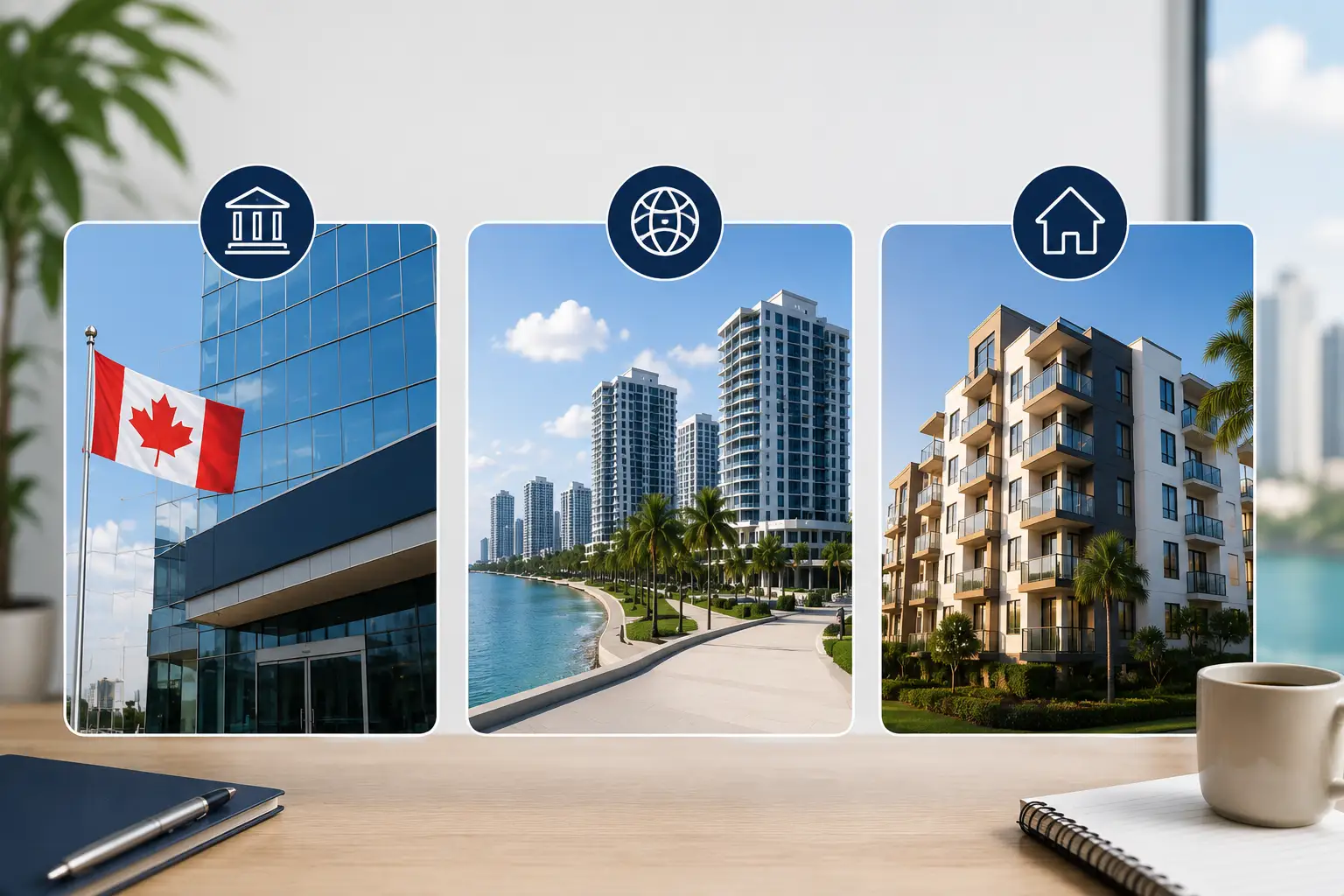
A foreign national mortgage Florida application becomes much easier when you choose the financing lane before falling in love with a property.
| Lending lane | Often a fit for | What to verify early |
|---|---|---|
| Cross-border bank | Canadians with established Canadian income, credit, and assets | Canadian credit acceptance, eligible properties, equity requirement, mortgage terms, and pre-approval rules |
| Foreign-national lender | Nonresident buyers who do not fit a standard U.S. mortgage profile | Foreign credit documents, income verification, reserves, loan-to-value limits, and property eligibility |
| Investment/DSCR-style program | Rental-property buyers where property cash flow is central to qualification | Rent calculation, coverage requirement, reserves, appraisal method, and condo eligibility |
| Cash or Canadian credit strategy | Buyers prioritizing speed or financing flexibility | FX cost, liquidity impact, Canadian borrowing cost, tax implications, and future refinancing |
Do not assume these lanes are interchangeable. A lender that works well with a Canadian salaried borrower may not be the best fit for a self-employed investor. A lender that specializes in investment property may also apply different standards to a vacation home.
How much down payment does a Canadian need?
There is no universal percentage for every foreign national mortgage Florida loan.
Required equity can change according to the lender, occupancy, property type, loan amount, credit profile, income documentation, and whether the property is intended as a second home or investment.
That is why using a generic online answer such as “Canadians need X percent down” can cause problems. Ask the lender to confirm the minimum equity, required reserves, and estimated cash to close for your actual profile.
The practical move is to obtain a written pre-approval or program summary before setting your maximum purchase price.
3. Build Your Canadian Document File Early
Underwriting slows down when documents arrive one at a time. A better foreign national mortgage Florida strategy is to prepare a clean digital folder before you start touring properties.
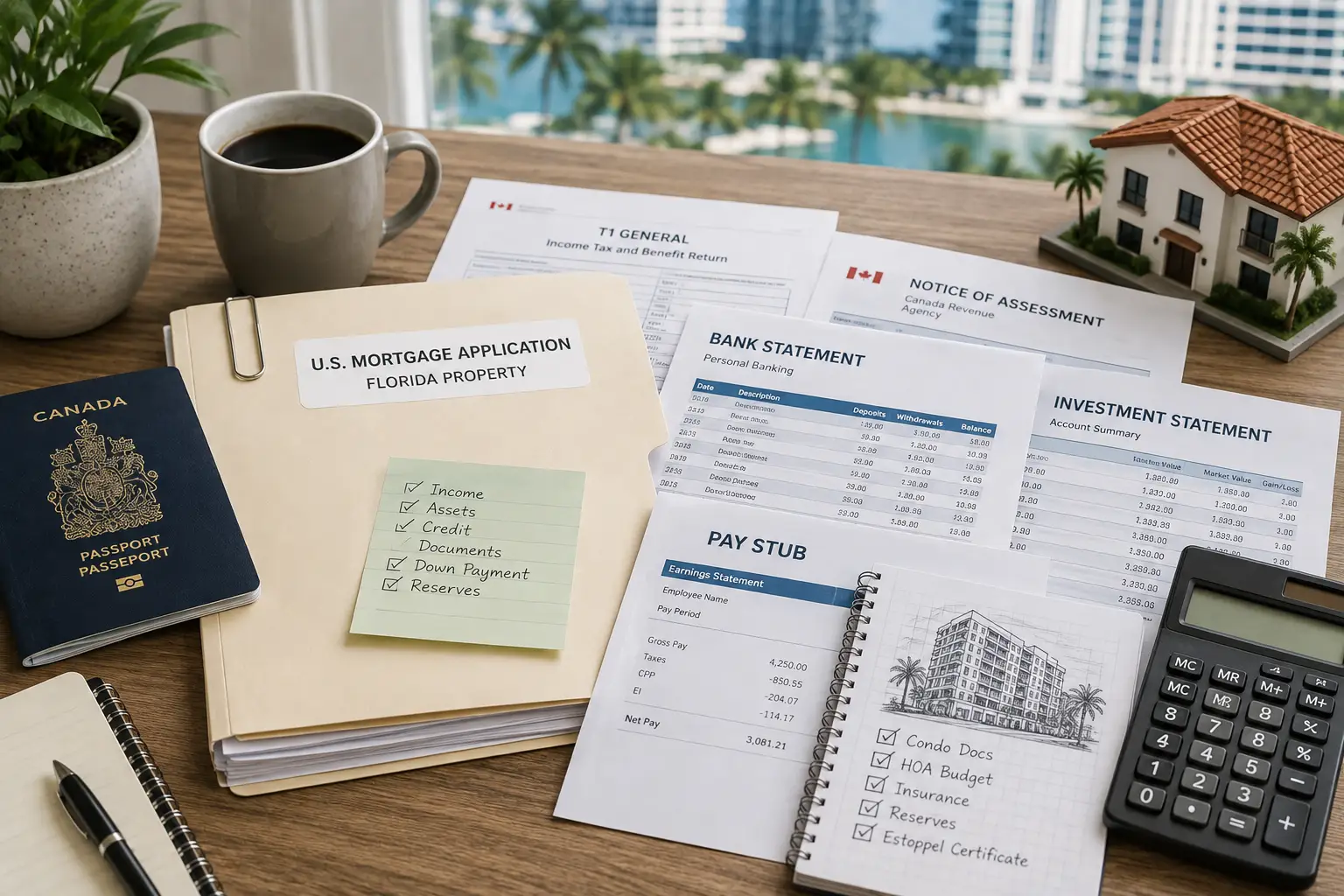
Depending on the lender and your financial profile, you may be asked for:
- Canadian passport and other identification
- T1 personal tax returns and Notices of Assessment
- T4 slips and recent pay statements for salaried borrowers
- Corporate returns or financial statements for business owners
- Recent Canadian bank and investment statements
- Documentation showing the source of the down payment
- Records for mortgages, lines of credit, and other liabilities
- Property tax and insurance information for real estate you already own
- Supporting documents for investment, pension, or other income
- A Florida purchase contract once you are under agreement
Keep names and addresses consistent across documents.
If funds move between Canadian accounts, keep a clear paper trail. Large unexplained deposits or last-minute account transfers may create additional questions during underwriting.
Canadian business owners should start even earlier. Business income can require more explanation than a straightforward salary, especially when corporate and personal finances overlap.
For buyers who also need help planning U.S. reporting and ownership-related tax obligations, Miami P&B Investments offers accounting support for international property owners.
4. Get Pre-Approved for Your Foreign National Mortgage Florida Plan
A pre-approval is more useful than a casual rate quote. It tells you whether your foreign national mortgage Florida plan appears workable based on the information reviewed so far.
Before shopping seriously, your pre-approval process should help answer four questions:
- What purchase-price range is realistic?
- What down payment and reserve level should you budget?
- Which property and occupancy types will the lender finance?
- How much time should you request for financing and closing?
Pre-approval is still not final approval.
Once you place a property under contract, the lender normally must evaluate the appraisal, title, insurance, supporting financial documents, and—when applicable—the condo association or project itself.
Should you compare more than one lender?
Yes.
If more than one lender can handle your profile, compare the complete economics rather than focusing only on the interest rate.
Use the Consumer Financial Protection Bureau’s Loan Estimate guidance to understand how loan costs can be compared consistently.
For a Canadian borrower, also ask each lender how it handles:
- Canadian credit history
- Canadian employment income
- Self-employed income
- Canadian investment accounts
- Currency conversion
- Required cash reserves
- Condo project review
- Remote signing
- Investment-property income
A slightly lower advertised rate is not very valuable if the lender cannot comfortably approve your borrower profile or the property you intend to purchase.
5. Screen the Property Before a Foreign National Mortgage Florida Offer
The property can derail a foreign national mortgage Florida approval even when the borrower is financially strong.
This is particularly important with Florida condominiums.
A lender may evaluate the association’s insurance, reserves, budget, owner concentration, litigation, delinquency levels, structural condition, special assessments, and other project-level risks.
Florida’s Department of Business and Professional Regulation maintains official guidance on milestone inspections and Structural Integrity Reserve Studies. These building-level issues deserve attention before a Canadian buyer assumes that every attractive condo will qualify for the same financing.
Before removing contractual contingencies, use Miami P&B Investments’ Florida condo questionnaire guide to organize the building-level review.
A unit can look perfect and still sit inside a project that creates serious mortgage friction.
What if the condo is non-warrantable?
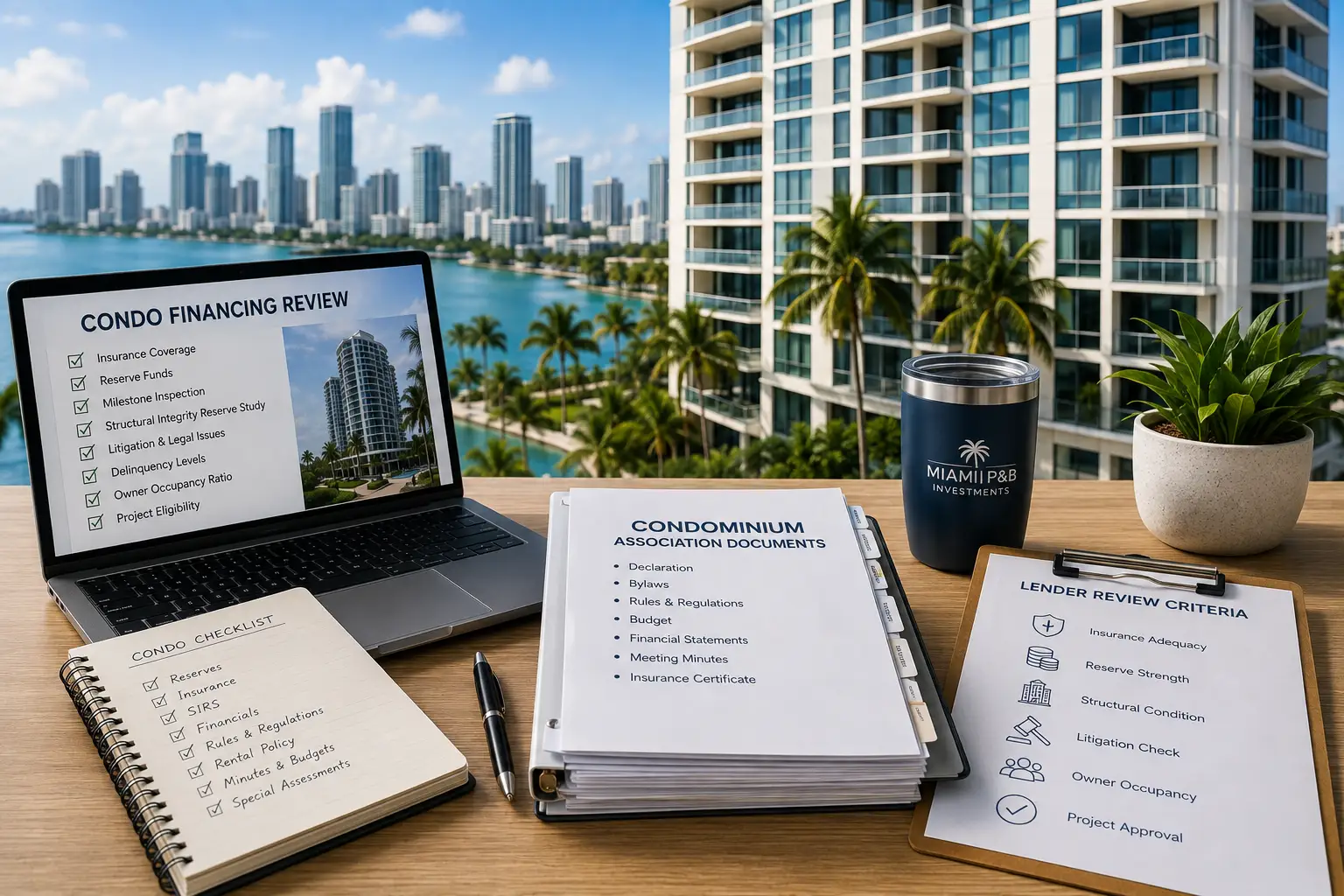
A non-warrantable condo is not automatically impossible to finance, but it can reduce your lender options or change the mortgage structure available to you.
The earlier the issue is identified, the better.
Ask your real estate agent and lender whether they know of financing problems associated with the building. Recent financed sales may also provide useful context, although another buyer’s approval never guarantees yours.
Financing should shape your property shortlist rather than becoming a surprise after the contract is signed.
6. Plan CAD-to-USD Funds and Reserves Before Closing
A foreign national mortgage Florida transaction is also a currency-transfer project.
Your escrow deposit, down payment, mortgage reserves, closing costs, insurance, taxes, HOA expenses, and future loan payments are all measured in U.S. dollars.
Do not wait until closing week to decide how you will move the money.
Lenders may need to verify where funds came from and how they moved between accounts. International transfers may also encounter bank limits, compliance reviews, wire cutoffs, weekends, and Canadian or U.S. holidays.
Build a funding schedule that accounts for:
- Initial escrow deposit
- Inspection and appraisal costs
- Remaining down payment
- Closing costs
- Prepaid expenses
- Required post-closing reserves
- An operating buffer for insurance, HOA fees, taxes, repairs, and maintenance
If CAD/USD movements could materially affect your budget, review Miami P&B Investments’ guide to managing currency exchange risk when buying in Miami before converting the entire purchase amount at the last minute.
7. Coordinate Mortgage, Condo Review, Insurance, and Closing Together
A successful foreign national mortgage Florida closing is a coordinated project.
Mortgage underwriting, appraisal, title work, condo review, association approval, insurance, and international funding frequently happen at the same time.
If one item begins late, it can affect the entire closing schedule.
Miami P&B Investments’ Florida real estate closing timeline for Canadian buyers shows how these workstreams overlap from contract to recorded deed.
For a financed purchase:
- Respond quickly to underwriting requests
- Keep your financial accounts stable
- Avoid taking on unnecessary new debt
- Keep records of major transfers
- Start insurance review early
- Submit association applications promptly
- Confirm when cleared closing funds are required
- Make sure every professional is working toward the same closing date
How long does a Canadian mortgage closing take?
There is no guaranteed timeline for every foreign national mortgage Florida transaction.
A straightforward borrower and property may move efficiently. A more complicated file can take longer because of self-employment income, a large loan, appraisal issues, condo documentation, insurance questions, ownership structure, or missing Canadian financial records.
Ask the lender for a realistic closing window before the purchase offer is written.
Your contract should reflect the financing process you actually need rather than an optimistic assumption.
Common Mistakes Canadians Should Avoid
Even financially strong buyers can make a foreign national mortgage Florida process harder than necessary.
The most common mistakes are preventable:
- Shopping for property before confirming the appropriate financing lane
- Assuming every lender evaluates Canadian credit or income the same way
- Moving large sums between accounts without preserving documentation
- Making a condo offer before asking about project eligibility
- Comparing interest rates without comparing lender fees and structure
- Waiting until closing week to plan CAD-to-USD transfers
- Taking on new debt during underwriting
- Changing employment without discussing the consequences with the lender
- Treating pre-approval as a guarantee of final approval
The theme is simple: a well-planned foreign national mortgage Florida file reduces surprises before they become contract problems.
Build Your Foreign National Mortgage Florida Plan With Miami P&B Investments
A foreign national mortgage Florida plan works best when financing and property selection are handled together.
The right lender still needs the right property, and the right property still needs a financing structure that matches your Canadian income, assets, intended use, risk tolerance, and closing timeline.
Miami P&B Investments helps Canadian buyers connect those pieces through local market knowledge, property screening, buyer representation, and coordination with the professionals involved in a cross-border purchase.
Explore the team’s Miami and South Florida real estate services before narrowing your property search around a financing assumption that has not yet been tested.
If you already know your target area, approximate budget, and whether the property will be a second home or investment, contact Miami P&B Investments before making an offer.
A financing-first conversation can help identify the lender questions, Canadian documents, condo checks, currency considerations, and closing deadlines that deserve attention before your deposit is on the line.