A good new build inspection checklist Florida buyers can rely on starts before you sign the contract, not at the final walkthrough. Hire your own licensed home inspector for the key construction stages, confirm the permits and certificate of occupancy, and check that your deposit, warranty and lien paperwork protect you before closing. A brand-new home can still have defects, and after closing your options narrow to the warranty and Florida’s construction defect process.
This guide covers single-family homes and townhomes bought from a builder, and new condo units bought from a developer before completion. Statute references reflect the 2026 Florida Statutes, as of November 2026. Our real estate services team can help you shortlist builders and buildings across South Florida.
Why New Construction Needs Its Own Inspection in Florida
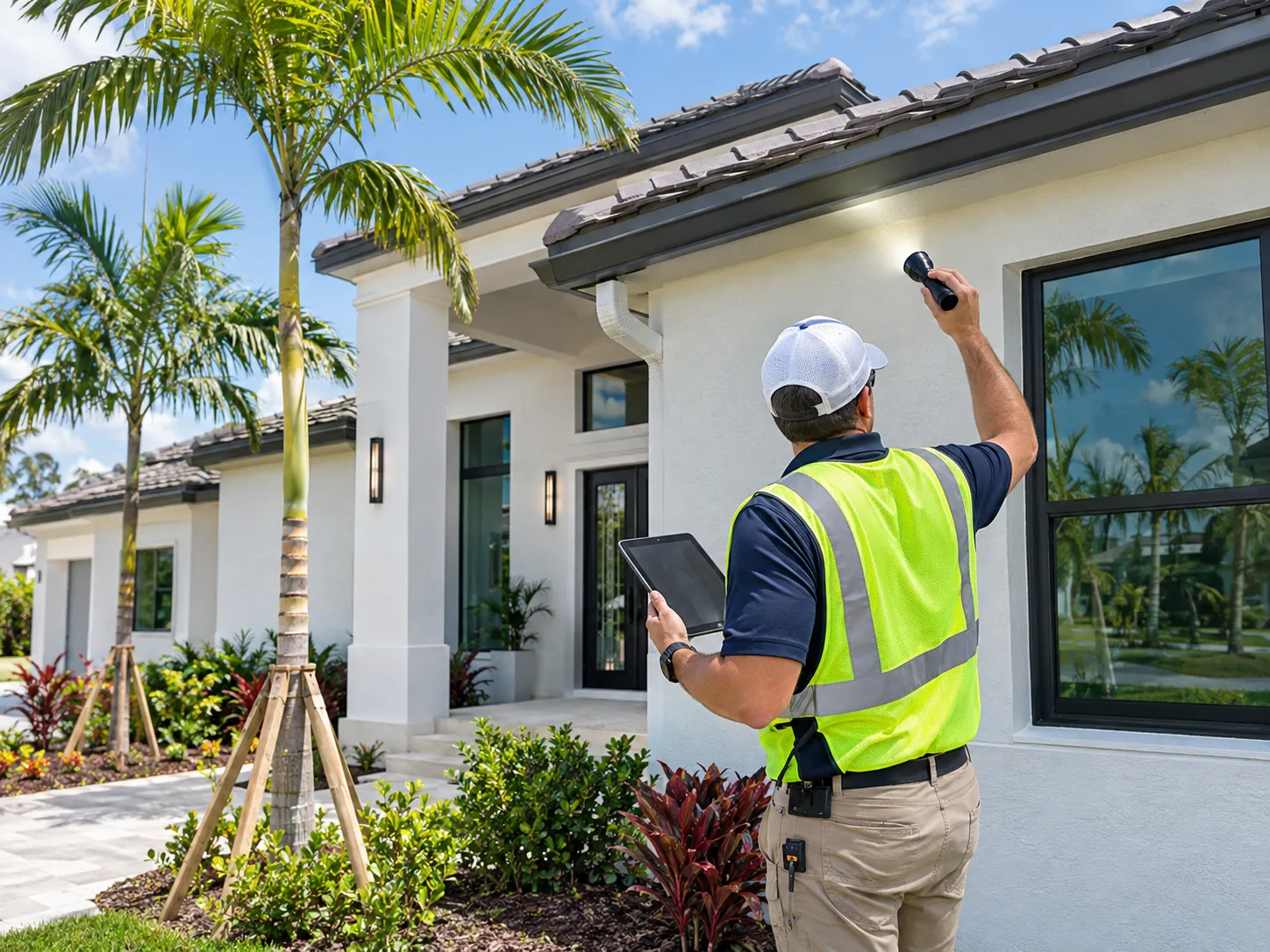
Florida requires a building permit before a home is built (section 553.79 of the Florida Statutes), and the building department must approve the final inspection before it issues a certificate of occupancy (CO). Those inspections check code compliance. They aren’t designed to judge finish quality or workmanship for you.
Passing them can also limit your options later. Under section 553.84, if the builder obtained the required permits, had the plans approved and passed every required inspection, that statute’s building-code claim generally isn’t available for damage limited to the home itself, unless the builder knew or should have known of the violation. That is a strong reason to find problems before closing.
So hire your own inspector. Florida requires paid home inspectors to be licensed by the Department of Business and Professional Regulation (DBPR), and bars them from repairing homes they inspected or inspecting property they have a financial interest in. Because the law calls a home inspection a limited visual examination, timing matters on a new build. Buying a resale home instead? Use our Florida home inspection checklist.
New Build Inspection Checklist Florida: 9 Checks Before You Close
Work through these in order. For a condo unit in a tower, checks 3 and 4 usually aren’t possible, so focus on the documents, the final inspection and the walkthrough.
1. Confirm the builder’s licence and permits
Look up the builder or general contractor on the DBPR licence search, then ask for the permit numbers. Miami-Dade County’s certificate of occupancy page lets you search certificates by address or permit number, and the City of Miami’s iBuild portal shows each permit’s required inspections and certificates.
2. Put inspection access in the contract
The builder controls the site until closing, and some contracts limit outside inspectors or require advance notice and proof of insurance. Before you sign, get written agreement that your inspector can attend the pre-drywall and final stages, and have a Florida real estate attorney review the contract. Our real estate legal services team can help.
3. Pre-pour foundation inspection (houses and townhomes)
Many South Florida homes are built on a concrete slab. Before it is poured, an inspector can check the forms, steel reinforcement, vapour barrier and the plumbing lines that will be buried under the slab.
4. Pre-drywall inspection
This is often the most valuable visit. After the framing, windows and rough plumbing, electrical and air-conditioning work are in, but before insulation and drywall go up, an inspector can see connections, straps, window installation and leaks that will soon be hidden.
5. Final inspection before your walkthrough
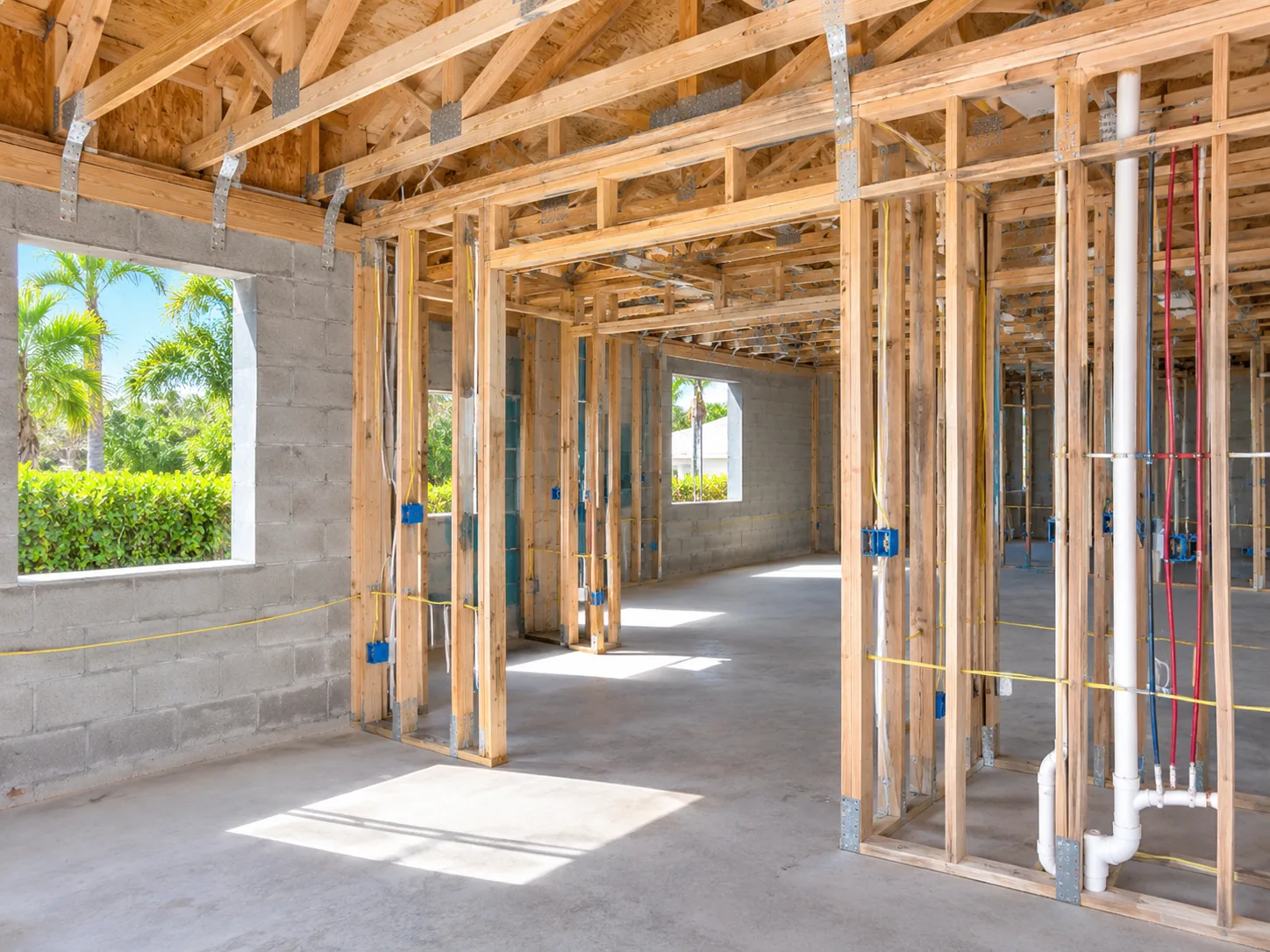
When the builder says the home is complete, book a full inspection: roof, attic, air conditioning, water heater, electrical panel, plumbing, appliances, drainage, and how windows and doors operate and seal. In Miami-Dade, windows, doors and roofing products are often approved through a county Notice of Acceptance (NOA), which states the product was designed to comply with the Florida Building Code, including its High-Velocity Hurricane Zone rules, so ask for the product approval or NOA numbers. A wind mitigation inspection can also help with insurance.
6. Blue-tape walkthrough and written punch list
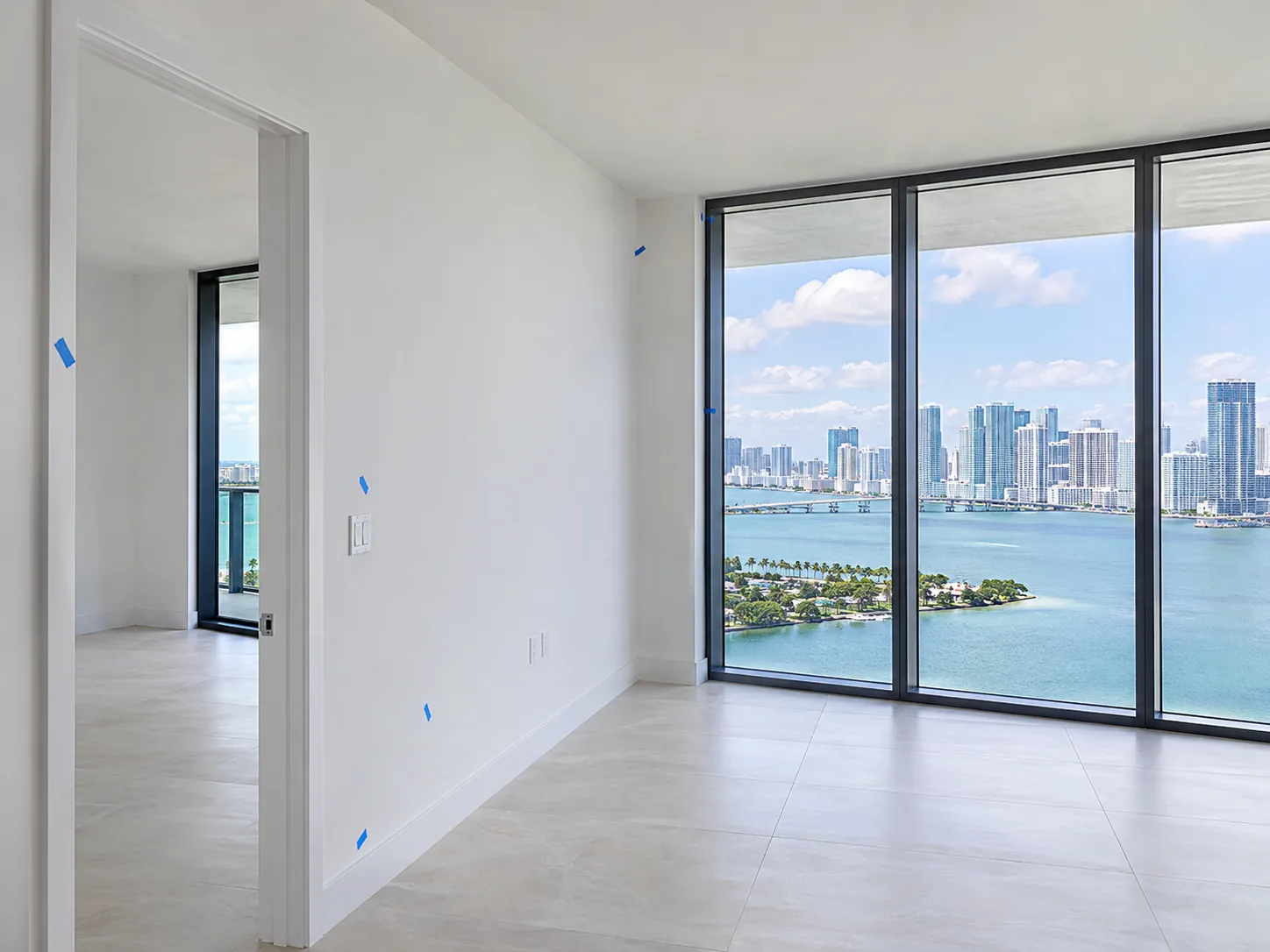
At the builder’s walkthrough, often called a blue-tape walkthrough, you mark scratches, paint misses, cracked tiles and anything that doesn’t work. Add every open item, including your inspector’s findings, to a written punch list the builder signs, with a date for each repair. Leave room in your Florida closing timeline to recheck it.
7. Certificate of occupancy and final permits
Ask for the CO and check it online. Miami-Dade issues a CO once the final inspection is approved and any completion holds are cleared. A temporary CO allows occupancy under certain conditions and, in Miami-Dade, is valid for 90 days. If you are closing on a temporary CO, ask what is still open and who will finish it.
8. Warranty documents
Read the written builder warranty before closing: what it covers, how to claim and what it excludes. Many builders use a “1-2-10” structure: one year for workmanship and materials, two for major systems such as plumbing, electrical and air conditioning, and ten for structural defects. That is common practice, not Florida law, so your own warranty’s terms are what count.
9. Lien releases and title
Under Florida’s construction lien law, an unpaid contractor, subcontractor or supplier can record a lien up to 90 days after its last work or materials, which can fall after your closing. A notice of commencement must be recorded and posted on site before the first inspection, and it generally expires a year after recording. On a direct contract, such as a custom home on your own lot, the contractor must give you a sworn final payment affidavit confirming that lienors who served notice were paid, or listing those who weren’t (section 713.06).
Buying from a builder that owns the lot? Ask your title agent how possible subcontractor and supplier claims are being cleared, for example with lien releases, and what your owner’s policy covers. Our guide to title insurance in Florida explains the policy.
New Build Inspection Checklist Florida: Stages at a Glance
Plan who checks what, and agree how the builder will tell you each stage is ready.
| Stage | When | What to check | Who does it |
|---|---|---|---|
| Contract and permits | Before you sign | Licence, permit record, inspection access, deposit escrow terms | You, your agent and a Florida real estate attorney |
| Pre-pour (houses and townhomes) | Before the slab is poured | Forms, reinforcement, vapour barrier, under-slab plumbing | Your licensed home inspector (the building department inspects separately) |
| Pre-drywall | After rough-ins, before insulation and drywall | Framing, straps, window installation, wiring, plumbing, ducts | Your licensed home inspector |
| Final inspection | When the builder says the home is complete | Roof, attic, systems, drainage, windows and doors, finishes | Your licensed home inspector |
| Blue-tape walkthrough | Before closing | Punch-list items and completed repairs | You and the builder, ideally with your agent or inspector |
| Closing documents | Before closing | CO, warranty, lien paperwork, title commitment | Title agent and your attorney |
| 11-month warranty inspection | Before the first-year warranty ends | Cracks, leaks, settling, systems | Your licensed home inspector |
Protect Your Deposit Before Construction Starts
For a new single-family home or townhome, section 501.1375 covers builders who sell 10 or more one- or two-family homes a year. Your contract must say you have the right to have deposits of up to 10% of the price held in escrow, for example by a bank, a Florida Bar attorney, a licensed real estate broker or a title insurer. You can waive that right in writing, so read any waiver first. To use escrowed money for construction, the builder must notify you and buy a surety bond payable to you, if one is readily available.
For a pre-construction condo, section 718.202 requires the developer to hold payments of up to 10% of the price with an independent escrow agent. The developer and its affiliates can’t serve as that agent. Money above 10% goes into a special escrow account. If the contract allows it, with a bold notice on the first page and above your signature, the developer may use that excess for actual construction costs once construction has begun, but not for marketing, commissions or loan costs.
To avoid deposit scams, check that the contract names the escrow agent, ask the agent for a receipt, and confirm wiring instructions by calling a number you found yourself, not one from an email. Our guide to Miami pre-construction condos for Canadian investors covers typical deposit schedules.
Pre-Construction Condos: What You Can and Can’t Inspect
In a high-rise, you usually can’t inspect the structure while it is being built, and Florida’s definition of a home inspection covers your unit but not the condominium’s common areas. Your protection comes mainly from the documents, the final unit inspection and the walkthrough.
Under section 718.503 of the Florida Statutes, you can cancel a purchase from a developer in writing within 15 days after you sign and receive all the required documents, such as the prospectus or the declaration, bylaws and estimated budget. A new 15-day right starts if the developer delivers an amendment that materially changes the offering against you. Waivers of these rights have no effect, and they end at closing. A developer also can’t close until the Division of Florida Condominiums, Timeshares, and Mobile Homes has notified it that its filing is proper (section 718.502).
Use those 15 days well: our Florida condo documents checklist shows what to read first.
After Closing: Warranties, Defect Claims and Deadlines
Condo warranties under Florida law
Section 718.203 gives condo buyers implied warranties from the developer. The unit is covered for 3 years from completion of the building. The roof, structure, and mechanical, electrical and plumbing elements serving the building (other than mechanical elements serving only one unit) are covered for 3 years from completion or 1 year after owners take control of the association, whichever is later, capped at 5 years. Contractors, subcontractors and suppliers give their own implied warranties: 3 years for the roof, structure, and mechanical and plumbing elements, and 1 year for other work. “Completion” generally means the CO for the whole building, and routine maintenance must be done.
New homes and townhomes
For homes outside a condominium, the purchase contract and the builder’s written warranty usually matter most. Section 553.835 also rules out implied-warranty claims for offsite improvements, such as streets, sidewalks, drainage and utilities that aren’t on your lot or don’t directly support the home, although claims based on contract, tort or other statutes aren’t affected.
The 11-month inspection
Many buyers book an inspection around month 11, before a one-year workmanship warranty ends, to catch cracks, leaks and system problems while the builder still covers them. If you are in Canada, our property management team can give the inspector access and follow up on claims.
Florida’s notice-of-claim process
If the builder won’t fix a defect, chapter 558 of the Florida Statutes sets a pre-suit process. You must serve a written notice of claim describing each defect and its location at least 60 days before suing, or 120 days for an association representing more than 20 parcels. The builder may inspect within 30 days and must respond in writing within 45 days (longer for associations), for example offering to repair, pay or both, or disputing the claim. You then have 45 days to accept or reject an offer.
Deadlines to act
Under section 95.11(3)(b), a claim over the design, planning or construction of a home generally must be brought within 4 years of the earliest of the temporary CO, CO or certificate of completion. For hidden defects, the clock runs from when the defect was or should have been discovered. Either way, since a 2023 amendment there is an outer limit of 7 years from that earliest date, down from 10. Warranty repairs don’t extend that 7-year limit, and a chapter 558 notice doesn’t pause it, so speak with a Florida real estate attorney early.
Common Mistakes With New Construction Inspections
These are the mistakes we see most often:
- Skipping the inspection because the home is new. City inspections check code compliance, not the workmanship you are paying for.
- Relying on the builder’s inspector. Hire your own Florida-licensed, independent home inspector.
- Signing a deposit waiver without reading it. One signature can give up escrow protection on a new home deposit.
- Accepting verbal promises. Florida requires developer condo contracts to warn that oral representations can’t be relied upon, and the same applies to any punch list. Get it in writing.
- Closing without checking the CO and lien paperwork. Confirm the certificate, the open items and how your title agent is clearing possible liens.
- Letting the first-year warranty lapse. Put the 11-month inspection in your calendar on closing day.
Close on New Construction With Miami P&B Investments
New construction appeals to many Canadian and international buyers because everything is new. It still needs independent eyes at each stage, and most of your leverage ends at closing.
Miami P&B Investments helps buyers compare builders and developers, review contracts and plan inspections and closings, including from Canada through our services for Canadian investors. Once the warranty period ends, our construction and repair services can take care of the home. Contact the team with the project you are considering and your expected closing date, and we’ll help you build your inspection plan.