
The trend of Canadian snowbirds selling Florida property has dominated real estate headlines throughout early 2026. Some realtors report triple the usual number of Canadian listings, trade tensions keep escalating, and the loonie remains stubbornly weak. If you own a condo or home in South Florida, you’re almost certainly asking the same question every other Canadian investor is asking right now: should I sell my Florida property, or is this the worst possible time to panic-sell?
As a team that works exclusively with Canadian investors in Miami real estate, we’ve had this conversation dozens of times in recent months. The answer is never as simple as “sell” or “hold.” It depends on your financial situation, your property type, your timeline, and whether you’re making an emotional decision or a strategic one.
This guide breaks down the real data behind Canadian snowbirds selling Florida property, walks you through both sides of the argument, and gives you a clear decision framework so you can act with confidence rather than fear.

Why Are Canadian Snowbirds Selling Florida Property in 2026
Understanding why so many Canadian snowbirds selling Florida property are making that choice right now requires looking at four forces hitting simultaneously.
1. The Tariff War and Political Tensions
The trade conflict between Canada and the United States has escalated dramatically. Canada currently faces steep tariffs on exports, and the broader political rhetoric — including talk of annexation and new registration requirements for Canadians staying longer than 30 days — has left many snowbirds feeling unwelcome. A Royal LePage survey found that 54% of Canadians who own U.S. property were planning to sell within the next year, with 62% citing the current administration’s actions as the primary reason.
Canadian visits to Florida dropped roughly 15% in the third quarter of 2025, and return flights from the U.S. fell 13.5%. Vehicle border crossings dropped even more sharply. The sentiment shift is real, measurable, and accelerating into 2026.
2. The Weak Canadian Dollar
The Canadian dollar has been hovering around US$0.69–0.70, making every expense tied to your Florida property significantly more painful. Your mortgage payment, HOA fees, insurance premiums, property taxes, and maintenance costs are all denominated in U.S. dollars. When the loonie is weak, your effective carrying cost jumps 30–40% compared to parity. For snowbirds on fixed retirement incomes, this alone can make ownership feel unsustainable. Understanding currency exchange risk when buying in Miami is critical to making a sound decision.
3. Skyrocketing Insurance and HOA Costs
Florida’s insurance market has been in crisis mode. The average condo insurance premium in Miami-Dade County now exceeds $2,500 annually — and that’s the average. Many oceanfront buildings have seen premiums triple or quadruple. Add in rising HOA fees driven by the state’s new 40-year structural inspection requirements (SB 4D), and some owners have watched their annual carrying costs double in just two years. We covered this in depth in our guide to Florida condo special assessments in 2026 and our breakdown of Miami HOA fees for Canadian buyers.
4. Emotional Fatigue
Beyond the numbers, there’s an emotional component that’s driving Canadian snowbirds selling Florida property even when the financials might argue against it. Many Canadians report feeling unwelcome in the current political climate. When you combine that sentiment with financial pressure, it becomes easy to understand why some owners want out — even at a loss.
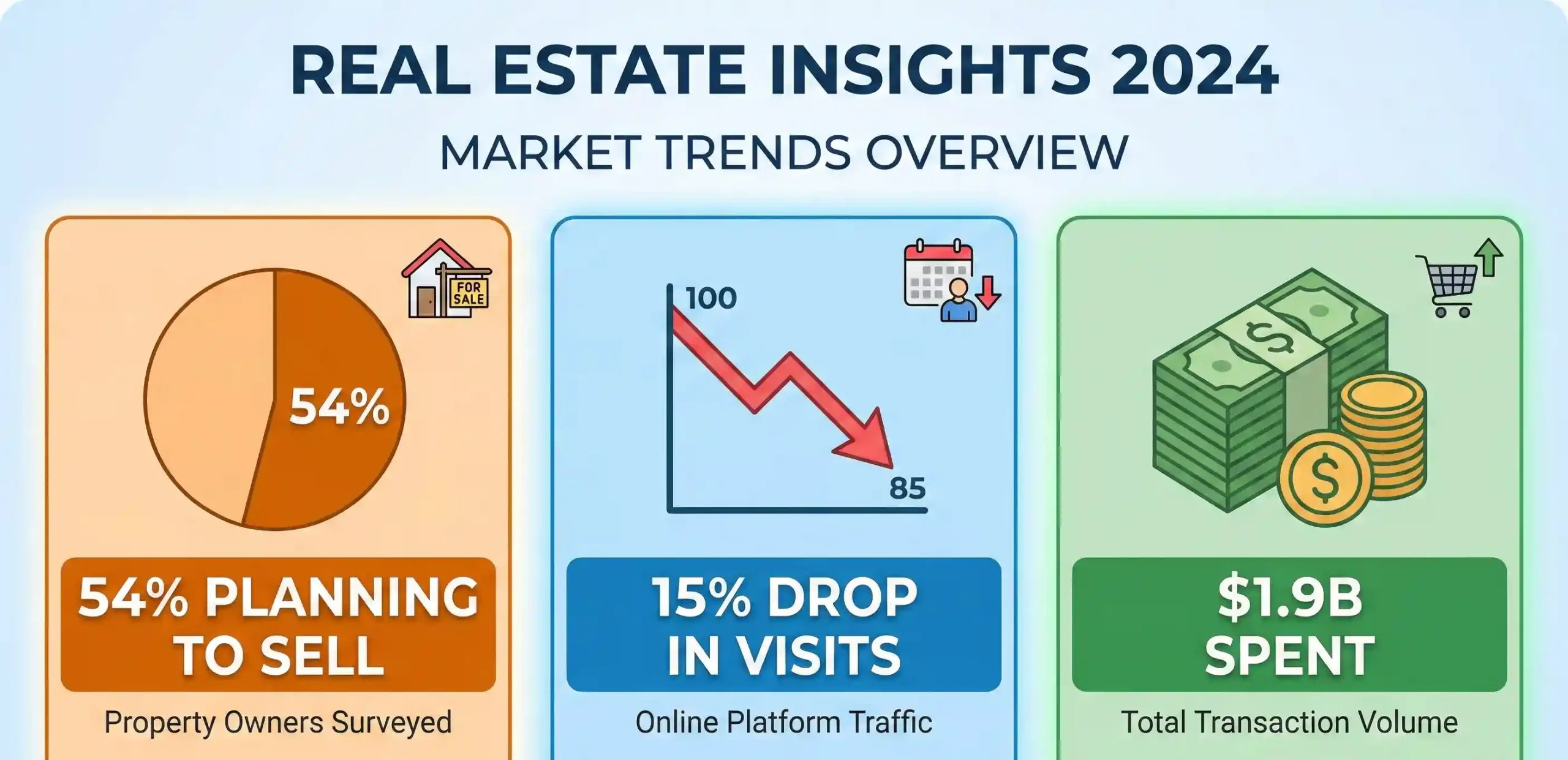
The Real Numbers Behind Canadian Snowbirds Selling Florida Property
Before making any decision, look at the hard data from the National Association of Realtors and other industry sources:
- $1.9 billion — What Canadians spent on Florida properties in 2025, a 52% increase from the prior year despite the selloff narrative
- 54% — Percentage of Canadian U.S. property owners planning to sell within the year
- 14.1 months — Current condo inventory supply in Miami-Dade County, firmly in buyer’s market territory
- 15% — Drop in Canadian visits to Florida in Q3 2025
- $494,400 — Record high median purchase price for foreign buyers in the U.S.
- 47% — Foreign buyers who paid all cash, nearly double the domestic average
Here’s the critical contradiction most headlines miss: while the narrative around Canadian snowbirds selling Florida property dominates the news, Canadian investment in Florida actually increased 52% year-over-year. The selloff is concentrated in the sub-$1 million condo segment, while higher-value investors are still buying aggressively. That distinction matters enormously when evaluating your own situation.
5 Reasons You Might Want to Sell
For some owners, selling makes clear strategic sense. Here’s when:
1. Your Carrying Costs Have Become Unaffordable
If your combined insurance, HOA fees, property taxes, and maintenance now exceed what you budgeted — and the weak CAD makes it worse — selling may be the financially responsible move. There’s no point holding a property that’s bleeding you dry every month.
2. You Bought in a Building with Major Assessment Risk
Older buildings (pre-2000, especially pre-1990) in Miami-Dade and Broward are facing the most severe special assessment exposure under the new 40-year inspection requirements. If your building hasn’t completed its milestone inspection, or if the reserve study shows a major shortfall, you could be looking at five- or six-figure assessments. In some cases, selling before that hits is the smarter play.
3. You Rarely Use the Property Anymore
If your usage has dropped to a few weeks per year and the property isn’t generating rental income, you’re essentially paying full carrying costs for very limited benefit. Unless you have a concrete plan to rent it out, the math may not work.
4. You Need the Capital for Other Investments
Real estate is illiquid. If your Florida property represents a disproportionate share of your net worth and you have better opportunities elsewhere, rebalancing makes sense — regardless of the political climate.
5. You’re Selling into Strength in Your Specific Submarket
Not all submarkets are equal. If you own in a desirable area like Brickell, Coconut Grove, or Edgewater, and your building is newer with healthy reserves, you may still get a strong price — especially from the wave of domestic buyers relocating from New York and California.

5 Reasons to Hold Instead of Joining Canadian Snowbirds Selling Florida Property
Before you list, consider whether the case for holding is actually stronger than the case for selling.
1. You’d Be Selling into a Buyer’s Market
Miami’s condo market currently has 14+ months of inventory — well above the balanced range of 6–9 months. That means buyers have leverage, and the flood of Canadian snowbirds selling Florida property is adding even more supply. Selling now, when every other Canadian is selling too, means you’re competing for the same pool of buyers and likely accepting a lower price. If you can afford to wait 12–18 months, market conditions are expected to improve as inventory is absorbed.
2. The CAD/USD Rate Amplifies Your Loss
If you bought when the Canadian dollar was closer to parity (or even $0.80 USD), selling now and converting back to CAD at $0.69–0.70 means you’re taking a significant currency hit on top of any price reduction. You could lose 15–20% on the conversion alone — money you’ll never recover.
3. Rental Income Can Offset Your Costs
Miami’s rental market remains strong, with seasonal rental rates of $450–800 per night during peak snowbird season (January–March). A professionally managed condo in the right building can generate enough income to cover most or all of your carrying costs. Our property management team works with dozens of Canadian owners who have turned their “problem property” into a cash-flowing asset by renting during the months they’re not using it.
4. FIRPTA Withholding Will Take a Major Bite
Here’s something many among the Canadian snowbirds selling Florida property don’t fully grasp: when you sell U.S. real estate as a foreign national, the IRS withholds 15% of the gross sale price under FIRPTA (Foreign Investment in Real Property Tax Act) — not 15% of your profit, but 15% of the entire sale price. On a $500,000 condo, that’s $75,000 held by the IRS until you file a U.S. tax return and prove your actual tax liability. Getting that refund can take 6–12 months. If you’re panic-selling, the FIRPTA hit makes the financial picture considerably worse. Review our complete guide to FIRPTA tax strategies for Canadian investors before making any move.
5. The Political Climate Will Change — Your Property Won’t
Trade wars are cyclical. Tariffs get imposed, renegotiated, and removed. Political tensions rise and fall. But the fundamental reasons you bought Florida property haven’t changed: the climate, the lifestyle, the tax advantages (no state income tax), and Miami’s position as a global real estate market. If your property is in a solid building in a desirable neighborhood, its long-term value trajectory hasn’t changed because of a tariff dispute.
A Decision Framework: Should You Sell or Hold?
Rather than reacting emotionally to the wave of Canadian snowbirds selling Florida property, run your situation through these four steps:
Step 1: Calculate Your True Carrying Cost in CAD
Add up your annual insurance, HOA, property tax, maintenance, and any mortgage payments. Convert to CAD at today’s rate. Is that number sustainable for 24 more months? If yes, holding is likely the better play.
Step 2: Estimate Your Net Proceeds After FIRPTA
Take your expected sale price. Subtract 15% for FIRPTA withholding, 6% for agent commissions, and any outstanding assessments or liens. Convert the remainder to CAD. Is that number meaningfully better than holding and renting? In many cases, it’s not.
Step 3: Get a Rental Income Estimate
Before selling, find out what your unit could realistically generate in annual rental income. If net rental income covers 70%+ of your carrying costs, the “hold and rent” strategy might be the smartest move — especially in a buyer’s market where you’d be selling at a discount.
Step 4: Assess Your Building’s Financial Health
Has your building completed its milestone inspection? Are reserves adequately funded? Are special assessments on the horizon? If the building is financially healthy, your property will hold value. If there are red flags, selling sooner may be the prudent choice.

How to Make Holding Work: The “Rent and Wait” Strategy
For Canadian owners who choose not to follow the trend of Canadian snowbirds selling Florida property, here’s the playbook that’s working for our clients right now:
Hire Professional Property Management
You can’t manage a rental property from Toronto or Vancouver. A local property management company handles tenant screening, lease management, rent collection, maintenance, and emergencies. The cost (typically 8–10% of rental income) is far outweighed by the income generated and the headaches avoided.
Structure Your Ownership Correctly
If you haven’t already, consult with a cross-border real estate attorney about whether an LLC structure makes sense for liability protection and estate planning. And make sure your cross-border accountant is filing both your U.S. tax returns and properly claiming foreign tax credits on your Canadian return using Form T2209.
Optimize Your Insurance
Many condo owners are overpaying for insurance simply because they haven’t shopped around or adjusted their coverage levels. Work with a Florida insurance broker who specializes in condo policies. Raising your deductible from $1,000 to $2,500 can meaningfully reduce premiums, and bundling with a wind/flood policy from the same carrier often yields discounts.
Use the Property Strategically
The most cost-effective approach for many Canadians: rent the property for 9–10 months of the year, then block out 2–3 months for personal use during peak season. This maximizes income while preserving your winter escape.
If You Do Decide to Sell: How to Maximize Your Return
If selling is the right move for your situation, don’t just list and hope. The Canadian snowbirds selling Florida property most successfully in this market are doing these things:
Price Aggressively From Day One
In a buyer’s market with 14+ months of inventory, overpricing by even 5% means your listing sits and goes stale. Properties that linger lose value. Price competitively from the start and create urgency.
Work With an Agent Who Understands FIRPTA
Most Florida agents rarely deal with foreign sellers. You need someone who understands the FIRPTA withholding process, can coordinate with your cross-border tax advisor, and knows how to structure the transaction to minimize your tax exposure. Our team at Canadian Snowbirds Realty handles this routinely.
Time Your Currency Conversion
Don’t convert your entire sale proceeds to CAD on the day of closing. Work with a currency specialist to set up a forward contract or staged conversion that takes advantage of rate fluctuations. Even a 1–2 cent improvement on a $500,000 conversion saves you $5,000–10,000 CAD.
File for a FIRPTA Withholding Certificate
If your actual tax liability will be less than the 15% withholding, you can apply for a withholding certificate (Form 8288-B) before closing to reduce the amount held. This requires advance planning — ideally 90+ days before your closing date.

Frequently Asked Questions About Canadian Snowbirds Selling Florida Property
Should Canadian snowbirds sell their Florida property right now?
It depends entirely on your individual financial situation. If your carrying costs have become unaffordable and your building faces major assessment risk, selling may be prudent. However, if you can manage the costs for another 12–18 months, holding through the current buyer’s market often results in a better outcome. The worst scenario is panic-selling at a discount while simultaneously taking a currency conversion hit.
How much does FIRPTA withholding cost Canadian sellers?
FIRPTA requires the buyer to withhold 15% of the gross sale price — not your profit, but the entire price. On a $600,000 sale, that’s $90,000 withheld by the IRS. You can reclaim the difference between the withholding and your actual tax liability by filing a U.S. tax return, but refunds typically take 6–12 months. Filing a withholding certificate in advance can reduce this amount.
Can I rent my Florida condo while I’m back in Canada?
Yes, and it’s one of the strongest strategies for offsetting carrying costs instead of joining the wave of Canadian snowbirds selling Florida property at a discount. Miami’s seasonal rental market is robust, with nightly rates of $450–800 during peak season. A professional property management company handles everything from tenant screening to maintenance while you’re in Canada.
How does the weak Canadian dollar affect my sale proceeds?
Significantly. If you bought when CAD was at $0.80 USD and sell now with the rate at $0.69, you lose approximately 14% on the currency conversion alone — before accounting for any price reduction. This hidden loss is why timing your conversion carefully is so important for Canadian snowbirds selling Florida property in today’s environment.
Are tariffs between Canada and the U.S. likely to change?
Trade policy is inherently cyclical. While current tensions are high, tariffs are typically renegotiated over time. Making a permanent real estate decision based on a temporary trade dispute may not serve your long-term interests. That said, if the political situation is causing you genuine distress, that emotional cost is real and worth factoring into your decision.
What are the tax implications of selling Florida property as a Canadian?
Beyond FIRPTA withholding, you’ll owe U.S. capital gains tax on any profit. You can then claim a foreign tax credit on your Canadian return using Form T2209 under the Canada-U.S. Tax Treaty to avoid double taxation. Working with a cross-border accountant is essential to minimize your total tax burden across both countries.
Is the Miami condo market going to crash?
Market data doesn’t support a crash scenario. While inventory is elevated and it’s currently a buyer’s market, prices have held steady and even posted moderate gains in the luxury segment. Analysts expect the market to stabilize and move toward balance by mid-2026 as mortgage rates ease and inventory is absorbed. The sub-$1M condo segment faces the most pressure from Canadian exits and insurance costs.
What should I do first if I’m thinking about selling?
Start with a property valuation and a carrying cost analysis — not a listing agreement. Understand what your property is worth today, what you’d net after FIRPTA and commissions, and what it would cost to hold for another 12–18 months. Then compare those numbers objectively. Contact our team for a free, no-obligation property evaluation.
The Bottom Line for Canadian Snowbirds Selling Property in 2026
The wave of Canadian snowbirds selling Florida property in 2026 is real — but that doesn’t automatically mean you should join it. The smartest Canadian investors we work with are making decisions based on their specific numbers, not headlines. Some are selling strategically and reallocating capital. Others are holding, renting their units, and waiting for better market and currency conditions to emerge.
What none of them are doing is making a rushed, emotional decision without understanding the full financial picture — including FIRPTA withholding, currency risk, and the opportunity cost of selling in a buyer’s market where Canadian snowbirds selling Florida property are flooding supply at the worst possible time.
Whether you decide to sell or hold, having the right team in your corner makes all the difference. At Miami P&B Investments, we specialize in helping Canadian investors navigate exactly these decisions — from property valuation and FIRPTA strategy to property management and cross-border financing.
Ready to get clarity on your Florida property? Schedule a free consultation with our Canadian investor team, or browse current Miami listings if you’re considering trading up rather than cashing out.